This is a free and open to the public event (In-person event only).
The 5th session of the Beginners Astronomy Class is the “How to Use Your Telescope”.
If you have a telescope and would like some help learning to set it up and use it, attend this Hands-on class.
For details, please visit here and download the sample information PDF package.
Views: 2
This is a free and open to the public online event, to attend please register with zoom by clicking here at or after 7:10pm.
The 4th session of the Beginners Astronomy Class covers the science behind the telescope.
How do our eyes actually perceive objects we see in the telescope and what is the physics that allows that perception.
For details, please visit here and download the sample information PDF package.
Views: 5
This is a free and open to the public online event, to attend please register with zoom by clicking here at or after 7:10pm.
The 3rd session of the Beginners Astronomy Class covers different methods of finding objects in the night sky. Special topic is learning the constellations.
For details, please visit here and download the sample information PDF package.
Views: 1
This is a free and open to the public online event, to attend please register with zoom by clicking here at or after 7:10pm.
The 2nd session of the Beginners Astronomy Class covers the different types of equipment used to observe the night sky, including telescopes, mounts, eyepieces, filters, and advantages and disadvantages of different options.
This session is a must if thinking about buying a telescope.
For details, please visit here and download the sample information PDF package.
Views: 2
This is a free and open to the public online Zoom event, to attend please click here at or after 7:10pm
The 1st session of the Beginners Astronomy Class gives a general overview of all of the different objects you can see in the night and day time skies, with some history and information about what they are and their significance. An overview of the current scientific understanding of the Universe’s beginning, present and future is also covered.
For details, please visit here and download the sample information PDF package.
Views: 2
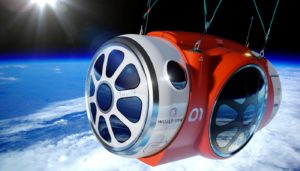
This is a free and open to the public online event.
Come and socialize with your fellow astronomy enthusiasts face-to-face virtually!
Bring your latest astrophotography, mini-presentation, questions or none and your own refreshments.
Views: 1
This is a free and open to the public hybrid event, held both inperson and online.
Due to the newly effective insurance requirements, we regret that we can not allow people under 18 on the Chapman Campus, they are welcome to attend online.
This meeting’s speaker will present inperson from the Chapman University’s campus.
Direct Multipixel Imaging and
Spectroscopy of Exoplanets
with a Mission to the Focal Region of
the Solar Gravitational Lens
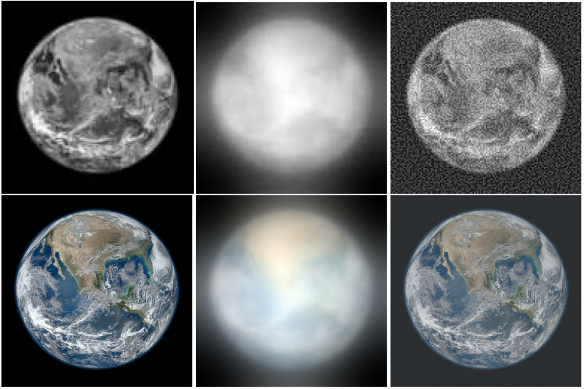
Nature has presented us with a very powerful “instrument” that we are yet to explore and put to use. This instrument is the Solar Gravitational Lens (SGL), which results from the ability of the gravitational field of the Sun to focus light from faint, distant targets. In the near future, a modest telescope with a coronagraph could operate in the focal region of the SGL and, using enormous amplification of the Lens, it could yield multipixel images of exoplanets. A meter-class telescope operating at the focal region of the SGL could yield ~(450×450)-pixel images of an “Earth 2.0” at distances up to 100 light years with spatial resolution high enough to see its surface features and to determine and study the signs of habitability. We discuss the imaging properties of the SGL and introduce a mission concept to the SGL focal region that could provide us with direct, high-resolution images and spectroscopy of a potentially habitable Earth-like exoplanet. We address aspects of mission design and spacecraft requirements, as well as capabilities needed to fly this mission in the next two decades. We rely on solar sailing propulsion which, when combined with rideshare to high Earth orbit and the use of smallsat architecture components, is the key technology that may allow us to reach high solar system transit velocities at a dramatic reduction in mission costs and lead time. With the currently available sail materials, components, and instruments we can fly practical missions with speeds of up to 7 AU/year – twice that of the current speed record holder – Voyager 1. With the sail materials that are being developed, smallsat velocities up to 20-25 AU/year will be reachable in 5-7 years. Benefiting from this progress, the “Sundiver” concept is new and exciting; it offers breakthrough capabilities for which the science community has been waiting for decades. We discuss the Sundiver sailcraft, enabling technology, instruments and unique science opportunities offered by small sailcraft placed on fast interplanetary trajectories – ultimately reaching the SGL’s focal region.
For background, please check: https://www.youtube.com/watch?v=NQFqDKRAROI and https://arxiv.org/abs/2303.14917
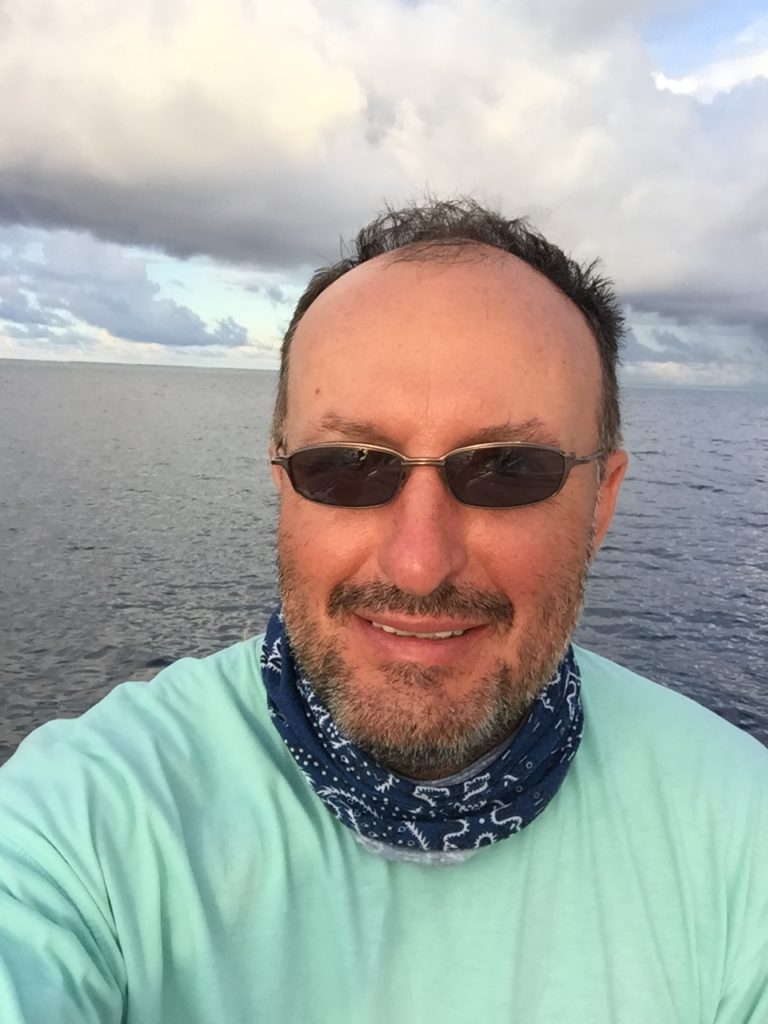
Slava G. Turyshev is an astrophysicist at the NASA Jet Propulsion Laboratory (JPL), California Institute of Technology and a professor at the Physics and Astronomy Department of the University of California, Los Angeles (UCLA). Dr. Turyshev earned his M.S. in physics (with honors) and a PhD in quantum field theory from the Lomonosov Moscow State University, Russia in 1987 and 1990, correspondingly. In 2008, he earned the Doctor of Science degree (Habilitation) in astrophysics from the same university. His primary research areas include gravitational and fundamental physics in space, research in relativistic astrophysics, astronomy, and planetary science. He is an expert in high-precision spacecraft navigation, solar system dynamics, satellite and lunar laser ranging, astrometry, and related technology efforts. Dr. Turyshev served as the NASA Project Scientist on the CNES/ESA Microscope mission (2016-2020); JPL Project Scientist for the Advanced Lunar Laser Ranging Facility at the Table Mountain Observatory, CA (2015-ongoing); Principal Investigator on the investigation of the Pioneer Anomaly (2003-2012). Recently, he was the Principal Investigator on the 2020 NIAC Phase III effort on the mission concept studies to use the solar gravitation lens (SGL) for multipixel imaging and spectroscopy of exoplanets (2017-2022). He has published over 220 papers, 2 books. Dr. Turyshev is a member of the International Academy of Astronautics.
Views: 21
The next Board Meeting of the OCA will be held on 01/28/24 at 10:30am via zoom. All members in good standing can attend, contact Alan Smallbone for details.
Views: 1
This is a free and open to the public hybrid event, held both inperson and online. Due to the newly effective insurance requirements, we regret that we can not allow people under 18 on the Chapman Campus, they are welcome to attend online.
This meeting’s speaker will present online.
How to Work Amateur Satellites
with Your Handheld Radio
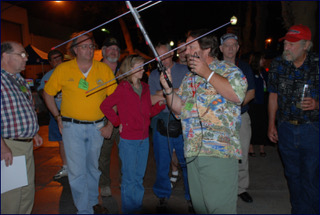
You do not need 100W of transmit power nor expensive antenna arrays to work the FM voice amateur satellites! Many hams already have the necessary equipment to “work the birds.” This presentation will walk you through ALL the steps needed to successfully work several ham satellites – including the International Space Station.
Clint K6LCS has been a ham since 1994, and found his niche in the hobby: working amateur satellites with minimal equipment and telling ALL about it! He has served a liaison between NASA, the ARISS team, and schools coordinating amateur radio contacts between the International Space Station and students (and also orchestrated a wildly successful ARISS contact). Audiences have never found his presentation slides “wordy” nor dull. Trivia questions are included throughout the session – audiences are never bored.
For reference materials, Clint has created a support Web site at work-sat.com. The Web site has become a one-stop source for ALL the citations and equipment recommendations and software suggestions made in the presentation.
Professionally, Clint was sales manager for ADI / Premier Communications / Pryme, worked for a Motorola commercial two-way dealer a couple of years, and for Ham Radio Outlet a couple more. He resides in Jurupa Valley, California, with his wife, Karen, and their new addition to the family: Huck, a two-year-old 75-pound Lab.
Views: 5
This is a free and open to the public hybrid event, held both inperson and online. Due to the newly effective insurance requirements, we regret that we can not allow people under 18 on the Chapman Campus, they are welcome to attend online.
This meeting’s speaker will present online from Connecticut.
The Wild West of Star Formation
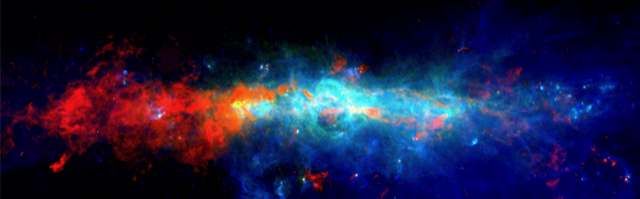
Tonight we saddle up to explore the extreme center of our Milky Way galaxy – a chaotic region containing dense gas, stars, and a supermassive black hole. The normal rules for star formation don’t seem to apply here and scientists are chasing down these law-breaking clouds in our Galaxy’s Center. We will explore a multi-wavelength perspective of our Galaxy’s Center and what fuels this extreme region. By understanding what is causing the rules of star formation to break down in this region, we can better understand how stars are born across the cosmos.
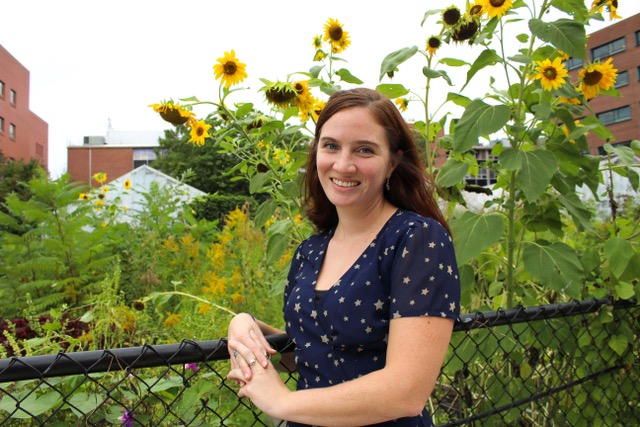
Cara Battersby is a PhD astrophysicist with a lifelong passion for education and community outreach. She is currently an associate professor of physics at the University of Connecticut where she leads the Milky Way Laboratory. This research group is funded by NSF and NASA and uses our Milky Way as a laboratory to explore physics across the cosmos, using both large observational surveys and numerical simulations. Dr. Battersby has authored over 70 publications and given over 50 invited research presentations. She has worked with folks at NASA on developing space mission concepts, is a co-founder of major outreach programs UConn STARs and BiteScis, and secretly wants to be Carl Sagan when she grows up. She loves being active outdoors (hiking, climbing, etc!), playing music and spending time with her wonderful family and friends.
Views: 2
