OCA Private Outreach – Cadence Park Elementary
Posted on by Martin ChristensenViews: 2

Views: 2
Views: 28
The Board of Directors for the OCA will be having their meeting on Nov. 10, 2024 at 10:30am via Zoom. All current members are welcome, please notify the OCA secretary and a link will be sent out on the day of the meeting. Contact any board member with questions.
Views: 4
Views: 1
Views: 1
The monthly meeting of the Astrophysics Special Interest Group is at 7:00 PM every third Friday of the month at Orange Coast College, Astronomy House. Please contact the ASIG chair for details at mark@ocastronomers.org .
Views: 1
The monthly meeting of the Astrophysics Special Interest Group is at 7:00 PM every third Friday of the month at Orange Coast College, Building 40, Astronomy House. Please contact the ASIG chair for details at mark@ocastronomers.org .
Views: 0
This event is for the school’s Back-to-School Night. The students and their parents are invited to stay at the campus for the arrival of the OCA astronomers with their telescopes, which will take place around the time that the Back-to-School Night ends.
Views: 4
Views: 1
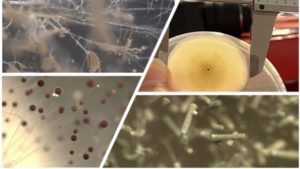
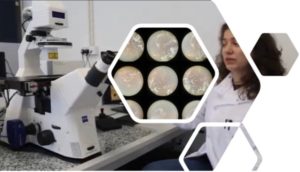
The field of space exploration is currently witnessing great developments and increased attention. As we gear up for new missions, we need to think about the tiny “hitchhikers” we bring along—microbes that come with us, either as part of our microbiomes or as chosen resources. Just like us, these microbes are affected by space conditions. So, understanding how they grow in space is crucial for planning future safe and sustainable missions.
In space microbiology, fungi often don’t get the attention they deserve. They can be a threat to astronauts, especially under stressful conditions like altered gravity, radiation, and exposure to lunar and Martian soil, where, for example, they can develop pathogenicity. However, fungi can also be incredibly useful. They can produce important products like medical drugs, metal nanoparticles, and enzymes. In space, fungal processes can change and sometimes improve, leading to cheaper and more efficient production processes.
This presentation will explore how fungi can help us in future missions and the risks they pose, such as infections, contamination, or damage to infrastructure. Research in astromycology, which studies terrestrial fungi in space and space-like environments, will be key to supporting sustainable, long-term human presence in space.
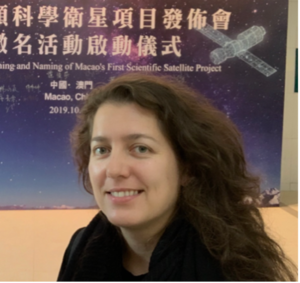
Marta Filipa Simões (ORCID ID: 0000-0002-8767-9487) is currently working as an Assistant Professor at the State Key Laboratory of Lunar and Planetary Science (SKLPlanets), at Macau University of Science and Technology (MUST), in China. She is a microbiologist and has worked with a myriad of microorganisms (mycobacteria, environmental and clinical bacteria, mycobacteriophages and filamentous fungi) in several different countries (UK, Saudi Arabia, Portugal, and China). Her research fits within astrobiology and astromycology, focusing on: fungal ecology and biodiversity in environmental analogues to outer-space conditions, fungal development under simulated outer-space conditions, bioprospection and application of filamentous fungi, and fungal growth containment (in the context of planetary protection) and exploitation to human needs in outer-space similar conditions.
Views: 3