This is a free online event, to attend please register with zoom using the “View Event Website” link on the box above.
Radio astronomy in South Africa:
Background, recent discoveries, and role
in the development of the continent
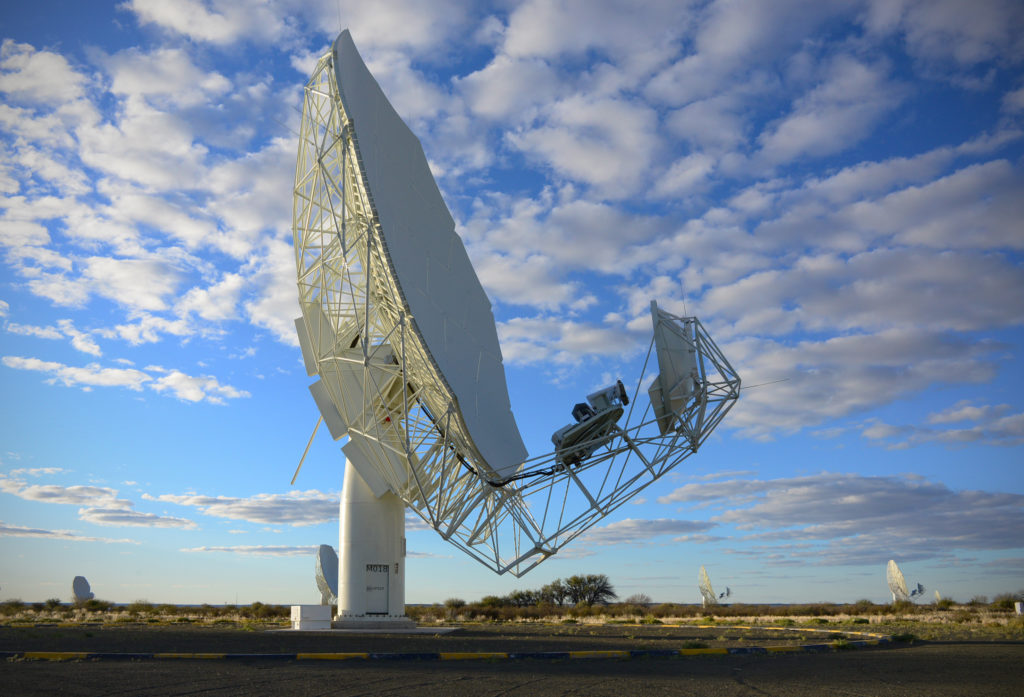
Our understanding of the universe is being comprehensively revisited thanks to a new generation of telescopes that are true big data machines. A region of the world where astronomy is growing faster than anywhere else, is probably Africa, a continent not traditionally associated with groundbreaking astronomical research. In South Africa, the radio astronomy community, in particular, has grown from merely present to broad and inclusive, thanks to the country’s commitment to the Square Kilometer Array (SKA) radio telescope project, and the home-grown human capacity development programme that accompanies it.
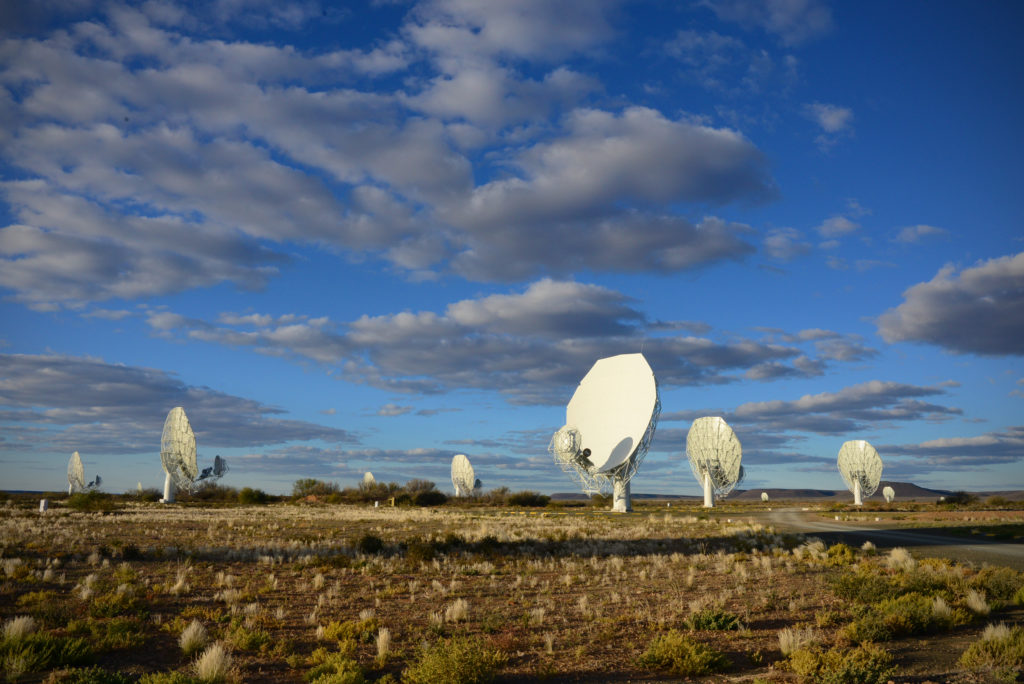
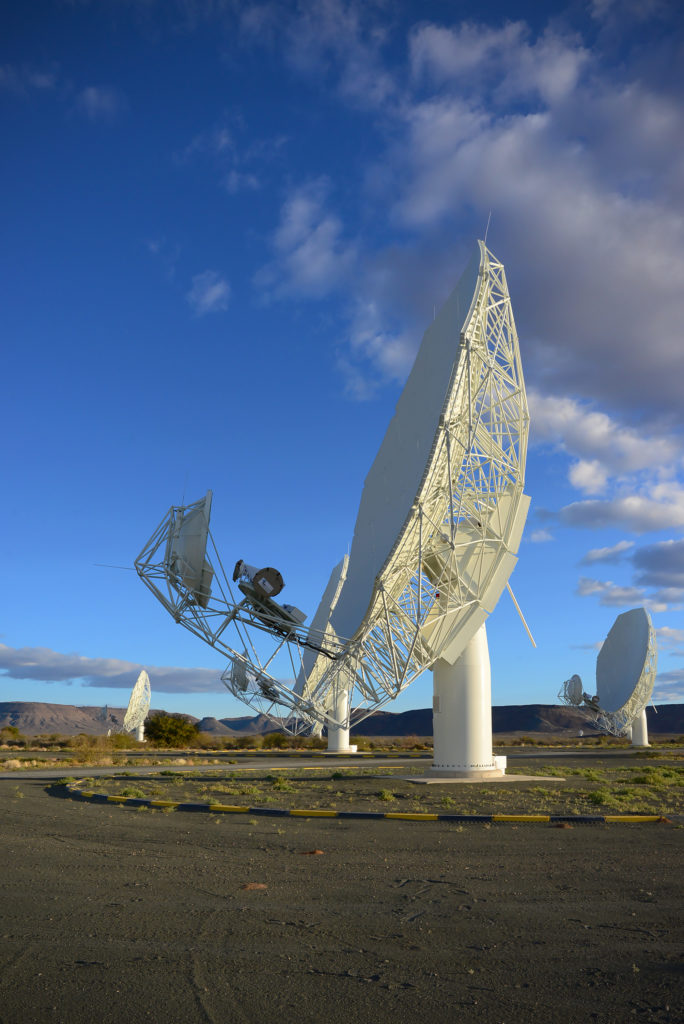
This presentation will set the context of this growth, review a few recent discoveries made with the MeerKAT radio-telescope, a 64-dish interferometer precursor to the SKA, and discuss the many developments, both scientific and social, that have been triggered by the South African SKA project. Indeed, the engagement into a scientific programme of this scale in Africa is not without broader impacts, social, economic and educational.
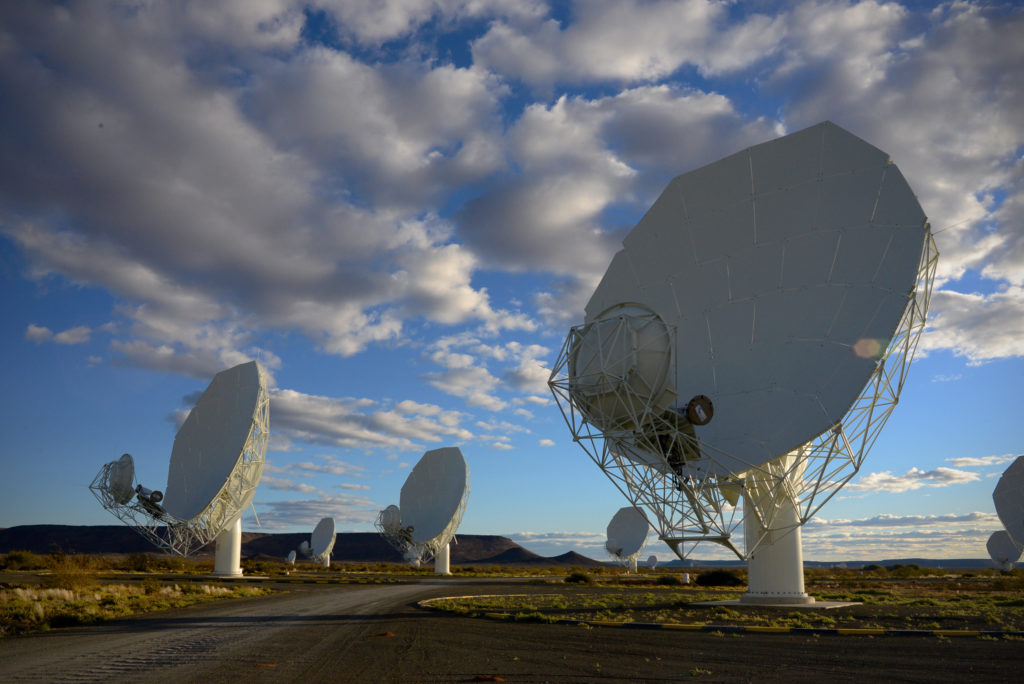
It will conclude with a view of the future, and the scientific ambitions of a continent and a community now able to use Africa’s big skies to pursue big dreams.
Dr. Carolina Ödman
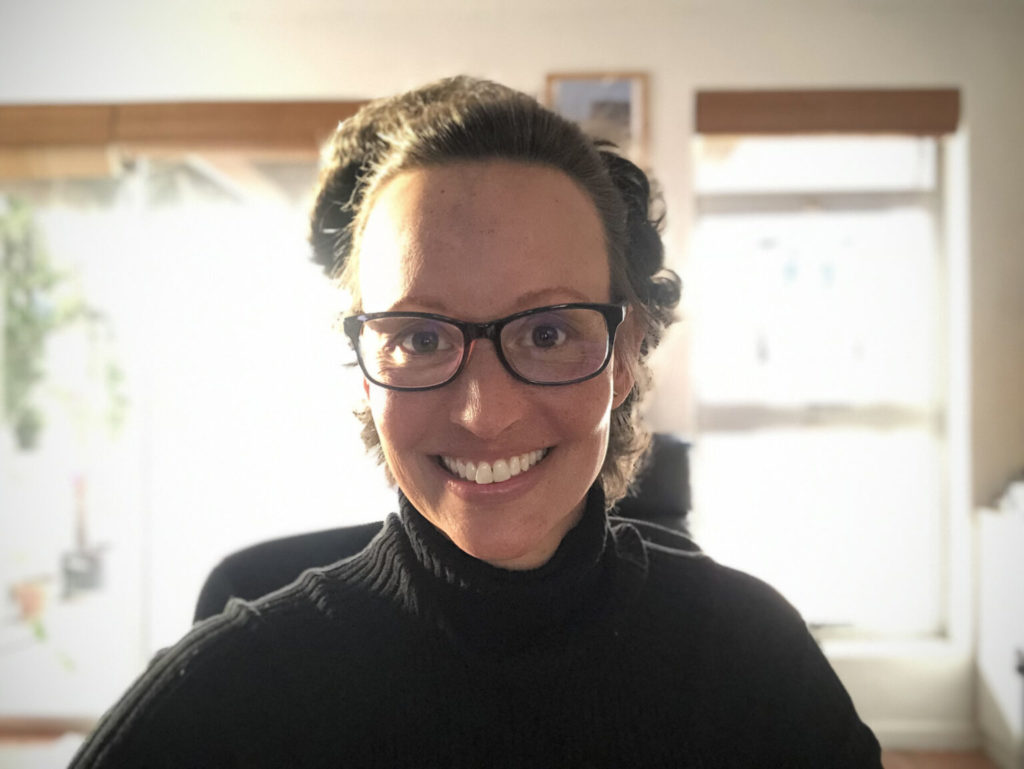
Dr. Ödman is Associate Professor at the University of the Western Cape, South Africa. Trained in physics at EPFL in Switzerland, she holds a PhD in cosmology from Cambridge University, UK. After a Marie Curie postdoctoral research fellowship in Italy, she grew an interest in education, becoming the first international project manager of Universe Awareness, an early childhood development program that uses the inspirational aspects of astronomy to stimulate children’s development in underprivileged environments. She led Universe Awareness for 5 years, taking it from an idea to a global network of volunteers running projects in more than 40 countries.
She joined the South African Astronomical Observatory as an SKA Research Fellow working at the interface between astronomy and technology, which she continues, as founding member of the “.astronomy” (dot-astronomy) conference and hackathon series. She was Director of Academic Development for the Next Einstein Initiative before joining thumbzup, a financial technology start-up as Chief Scientist. At thumbzup she set up a data science and analytics pipeline. In 2018, she joined the Inter-University Institute for Data Intensive Astronomy as Associate Director, Development and Outreach. There, she leads a number of initiatives, including big data skills development, and continues to do multidisciplinary research on how big data and astronomy can contribute to development of communities and society at large. Her work has earned her numerous awards, including Inspiring Fifty South Africa (2020), an International Astronomical Union Special Award for Astronomy Outreach, Development and Education (2018), Mail & Guardian Top 200 Young South Africans (2014), Bilan Magazine 300 most influential of Switzerland – category under 40s (2013), an American Association for the Advancement of Science Prize for Online Resources in Education (2010).
https://carolune.org
https://astro.uwc.ac.za
https://www.idia.ac.za
Views: 2
This is a free and open to the public online event, to attend please register with zoom by clicking here.
The 6th session of the Beginners Astronomy Class covers the basics of astrophotography, covering different types of imaging, how different types of cameras are used for this kind of photography, and other equipment and considerations for taking a good picture.
This session is taught by Kyle Coker, who is active in the club’s AstroImaging special interest group.
For details, please visit here and download the sample information PDF package.
Views: 2
This is a free and open to the public online event, to attend please register with zoom by clicking here.
The 5th session of the Beginners Astronomy Class is the “How to Use Your Telescope”.
If you have a telescope and would like some help learning to set it up and use it, attend this on-line class.
For details, please visit here and download the sample information PDF package.
Views: 0
This is a free and open to the public online event, to attend please register with zoom by clicking here.
The 4th session of the Beginners Astronomy Class covers the science behind the telescope.
How do our eyes actually perceive objects we see in the telescope and what is the physics that allows that perception.
For details, please visit here and download the sample information PDF package.
Views: 1
This is a free and open to the public online event, to attend please register with zoom by clicking here.
The 3rd session of the Beginners Astronomy Class covers different methods of finding objects in the night sky. Special topic is learning the constellations.
For details, please visit here and download the sample information PDF package.
Views: 1
This is a free and open to the public online event, to attend please register with zoom by clicking here.
The 1st session of the Beginners Astronomy Class gives a general overview of all of the different objects you can see in the night and day time skies, with some history and information about what they are and their significance. An overview of the current scientific understanding of the Universe’s beginning, present and future is also covered.
For details, please visit here and download the sample information PDF package.
Views: 4
This is a free online event, to attend please register with zoom using the “View Event Website” link on the box above.
Come and socialize with your fellow astronomy enthusiasts face-to-face virtually!
Bring your latest astrophotos, mini-presentation, questions or none and your own refreshments.
Views: 1
This is a free online event, to attend please register with zoom using the “View Event Website” link on the box above.
Into the Void: Probing the Space between
Planets, Stars, and Galaxies
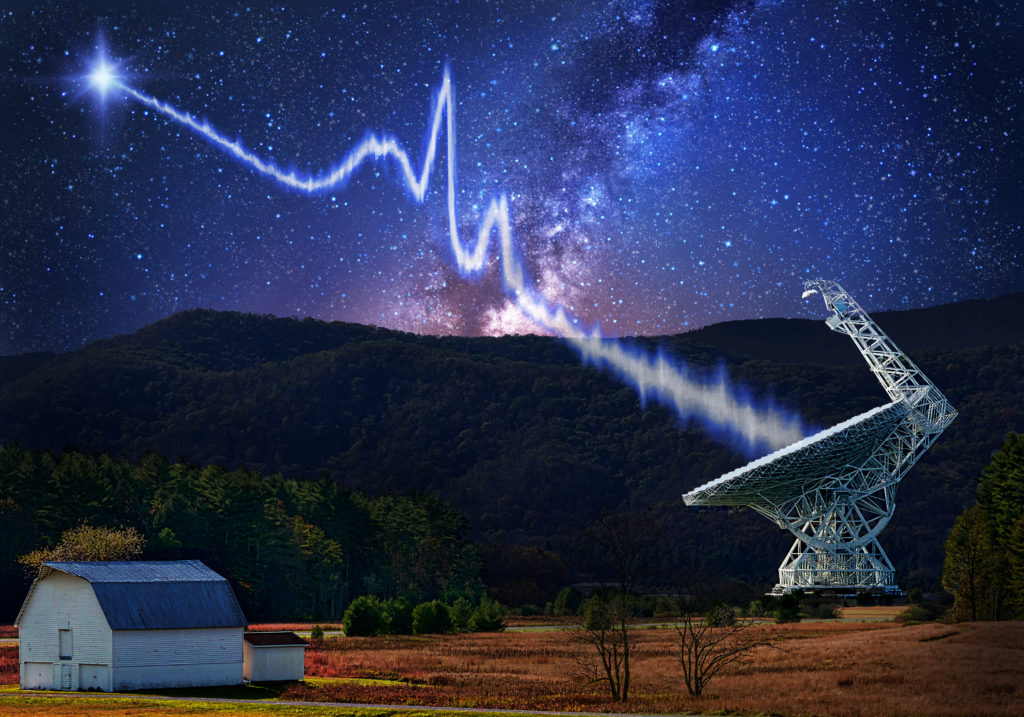
It is hard for us to grasp how vast and how empty space is, but it is also true that the vast majority of matter in the universe is distributed at barely-detectable densities through the voids between planets, stars, and galaxies. The propagation of radio pulses through the tenuous interstellar and intergalactic media offers a unique probe of this gas. Pulses from radio pulsars – rapidly spinning neutron stars – have been used to map the ionized interstellar medium of the Milky Way.
Into the Void with Voyager, Pulsars, and Fast Radio Bursts
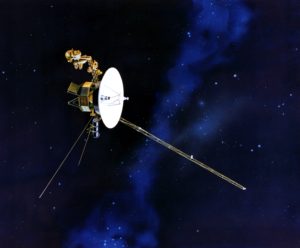
The recent discovery of fast radio bursts has allowed us to start probing the intergalactic medium even as we try to understand what powers these enigmatic radio pulses from distant galaxies. Closer to home, data from the Voyager spacecraft has revealed a new way to monitor the boundary between the solar wind and interstellar space. We will take a quick tour of these diverse phenomena, and what we have learned so far.
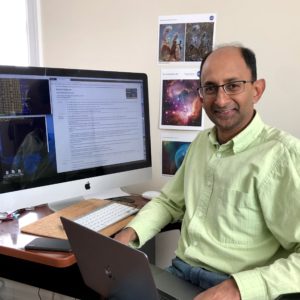
Shami Chatterjee is a Principal Research Scientist at the Cornell Center for Astrophysics and Planetary Science and the Carl Sagan Institute, which seems like coming full circle, since he grew up watching Carl Sagan’s Cosmos and dreaming about the stars. Dr. Chatterjee studies neutron stars, works on the forefront of efforts to use them to build a low-frequency gravitational wave detector, and has been in hot pursuit of fast radio bursts, mysterious flashes of radio waves that are coming from billions of light years away.
Dr. Chatterjee has a PhD in astronomy from Cornell University, and he was a Jansky Postdoctoral Fellow at the National Radio Astronomy Observatory in Socorro, New Mexico and the Harvard-Smithsonian Center for Astrophysics in Cambridge, Massachusetts. After a stint as a University Fellow at the University of Sydney in Australia and as an astronomer at the Australia Telescope National Facility, he has been at Cornell University since 2009.
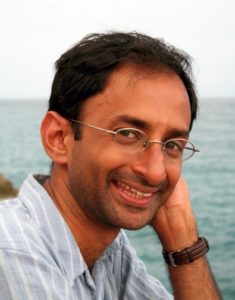
Dr. Chatterjee’s work has appeared on the cover of Nature, in the New York Times and Washington Post, and has even been picked up by his hometown newspaper in Kolkata, India. He enjoys a quiet life in upstate New York with his lovely wife and wonderful children, and laments the fact that his to-read pile grows faster than he can possibly keep up with.
Views: 3
This is a free online event, to attend please register with zoom using the “View Event Website” link on the box above.
Come and socialize with your fellow astronomy enthusiasts face-to-face virtually!
Bring your latest astrophotos, mini-presentation, questions or none and your own refreshments.
Views: 2
