This is a free and open to the public online event.
The Dynamic Sky:
How We Find Discover and Understand
Stellar Explosions in the 21st Century
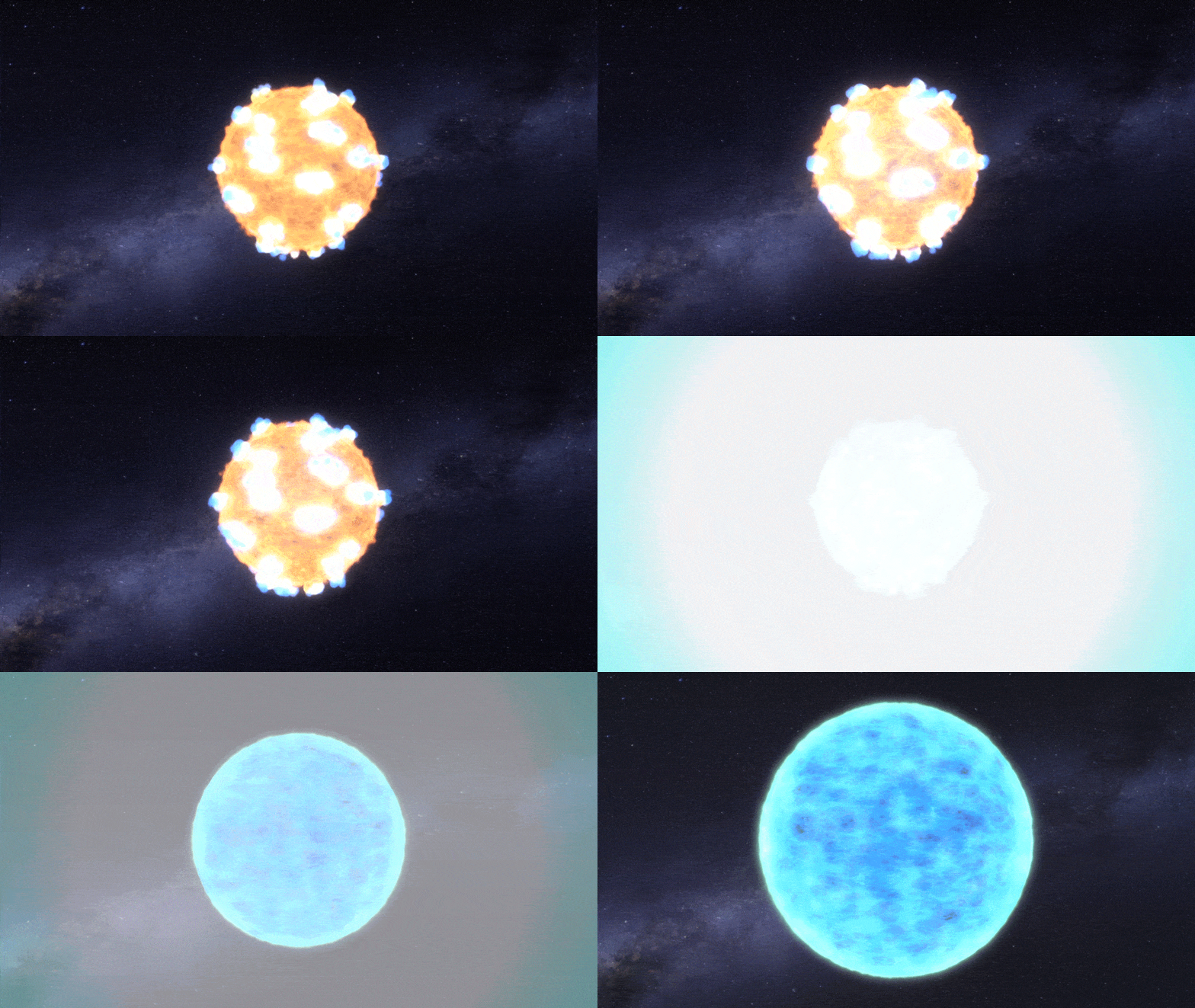
Humans have recorded the appearance of “new stars” since prehistory, but only in the last century have astronomers begun to understand their nature as stellar explosions. These “supernovae” provide clues about the lives and deaths of stars, the formation and evolution of galaxies, the production and distribution of chemical elements (including those required for life on Earth), and even the accelerating expansion of the Universe.
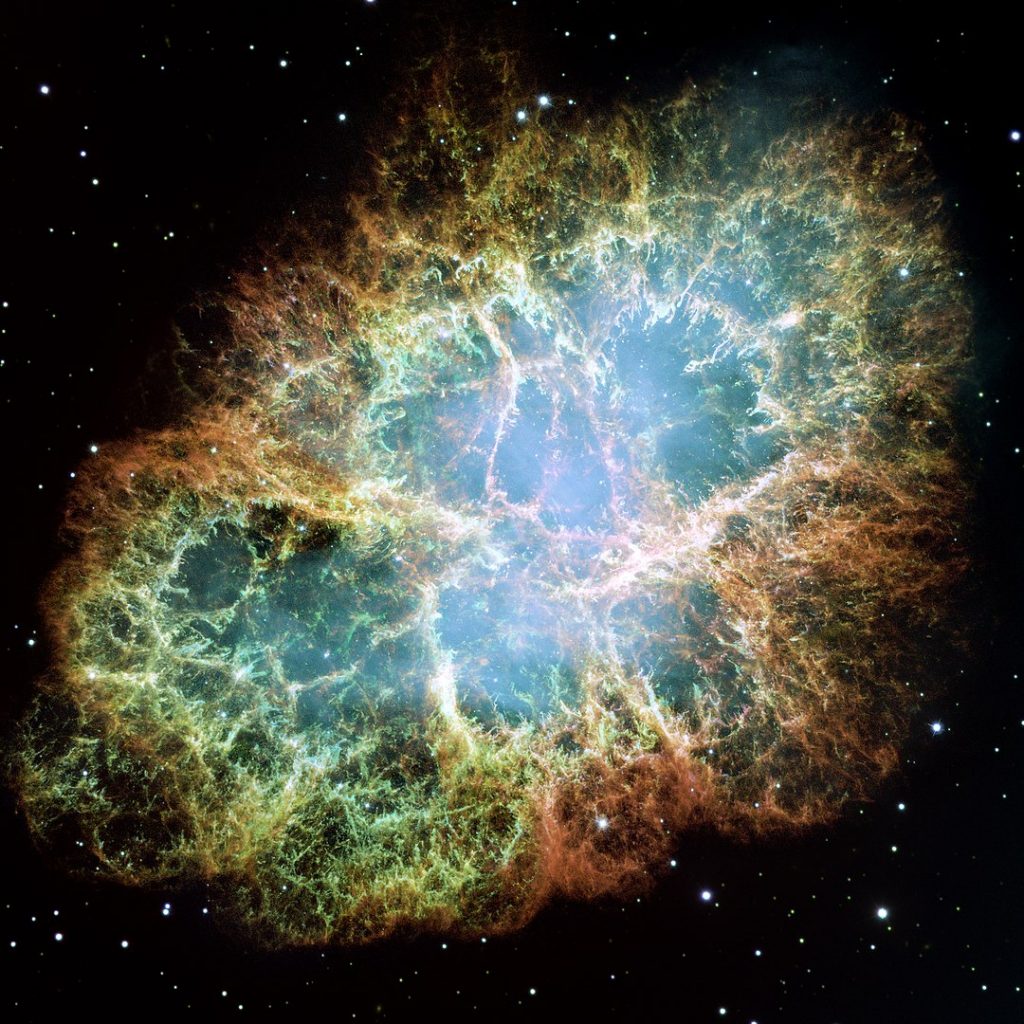
In the last two decades, the discovery rate of supernovae has ballooned from hundreds per year to tens of thousands per year, and in the coming decade, it will reach into the millions. This explosion can be traced back to the same technological advances behind the Internet age: high-speed telecommunications, digital imaging, increased computer processing power, and machine learning. This presentation will explore the history and future of supernova observations, with a focus on the technology behind them and the science they enable.

Dr. Griffin Hosseinzadeh is a postdoctoral researcher at Steward Observatory at the University of Arizona, where he studies various types of stellar explosions. He was previously a postdoctoral researcher at the Center for Astrophysics | Harvard & Smithsonian. He received his bachelor’s in physics from UC Berkeley in 2012 and his Ph.D. in astrophysics from UC Santa Barbara in 2018.
Views: 2
This is a free and open to the public online event.
Cosmic rays, antimatter, dark matter:
connecting the dots
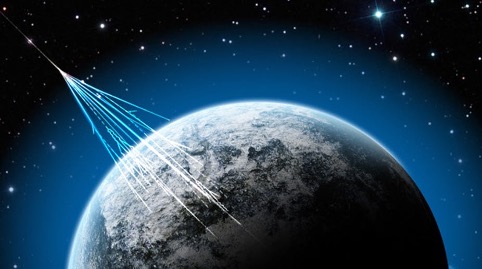
In August 1912, Austrian physicist Victor Hess made a discovery that opened a new window to the most energetic phenomena happening in the universe: he had discovered cosmic rays. Cosmic rays are high-energy charged particles coming from space and striking the Earth from all directions. After a century of transformative discoveries and advancements, cosmic-ray physics is a lively and interdisciplinary field of research. In recent years, space-born experiments have delivered many new measurements of cosmic-ray protons, nuclei, electrons, and their antiparticles which generate renewed interest and prompted new open questions. This colloquium will address the main open questions in cosmic rays concerning their nature, their origin, and their connection with the dark matter puzzle. Emphasis will be given to the rare antimatter component, which is a promising discovery tool for new fundamental physics or exotic astrophysical phenomena.
Nicola Tomassetti is an astroparticle physicist and space scientist. He is an associate professor at the Department of Physics and Geology at the University of Perugia, Italy. His research interests include cosmic rays, dark matter, antimatter, heliospheric, and space physics phenomena. He is part of the Alpha Magnetic Spectrometer collaboration for the search for dark matter and antimatter in space. He teaches introductory physics, space physics, cosmology & astroparticles for undergraduate, master’s degree, and PhD students.
Views: 5
This is a free and open to the public online event, to attend please register with zoom by clicking here.
The 1st session of the Beginners Astronomy Class gives a general overview of all of the different objects you can see in the night and day time skies, with some history and information about what they are and their significance. An overview of the current scientific understanding of the Universe’s beginning, present and future is also covered.
For details, please visit here and download the sample information PDF package.
Views: 3
This is a free and open to the public online event.
The Backstory of Contact Binary Stars
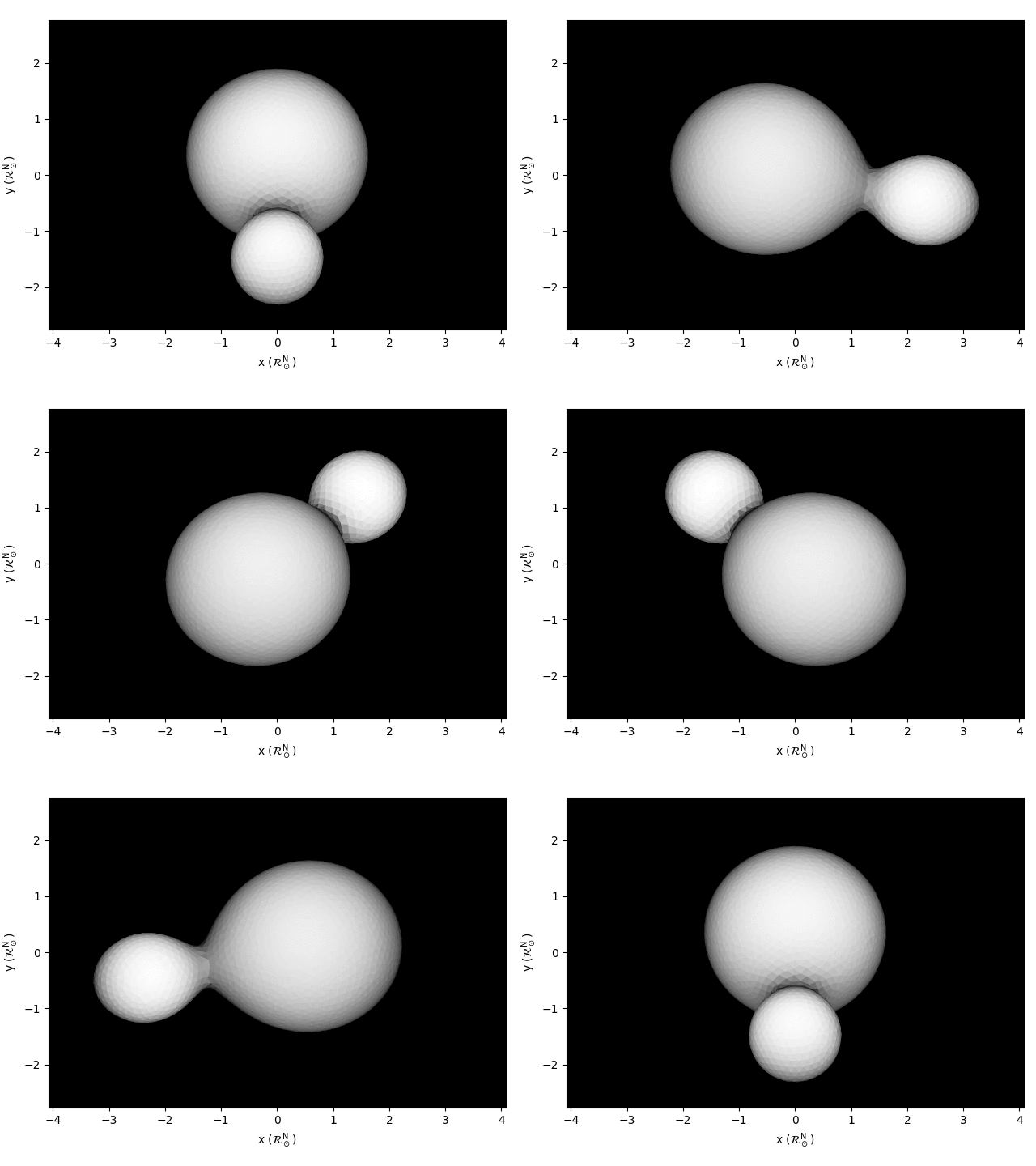
Contact binary star systems have the remarkable property that they orbit so closely they share a common atmosphere. They are the most common type of eclipsing binary star system. Despite extensive observations over more than a century, answers to the most fundamental questions have eluded scientists until now: How do they form? How do they survive tranquilly in contact so long? What becomes of them in the end? An outburst in 2008 showed directly that contact binary stars end their long lives by merging in an explosive event known as a red nova. This presentation will reveal the recently uncovered backstory that answers these questions, and it will conclude by considering how these answers might help identify which contact binary will be the next to explode.

Professor Larry Molnar earned a B.S. in astronomy from the University of Michigan along with an MA and a PhD in astronomy from Harvard University. (Hence, he has the three-degree background appropriate for one studying the Universe) He was a postdoc at the Smithsonian Astrophysical Observatory and taught at the University of Iowa. He has been a professor of Physics and Astronomy at Calvin University since 1998.
Views: 3
The first Star-B-que since the pandemic started is slated for July 30, 2022. This is a pot luck gathering at the Kuhn Observatory at Anza. Bring a dish to share with your fellow astronomers. The club will have some tables set up and a bbq available to use, so please bring something to share and mix with your fellow astronomers. Take precautions for your own safety. If you have any questions contact any board member.
This event has been postponed until the August Star Party due to weather concerns.
Views: 1
The OCA Board meeting will be held online via zoom and is open to all members. Please contact Alan Smallbone if interested in attending. Meeting starts at 10:30am.
Views: 1
This is a free and open to the public online event.
Rovers on Mars: 21st Century
Natural History
Expeditions to Another Planet
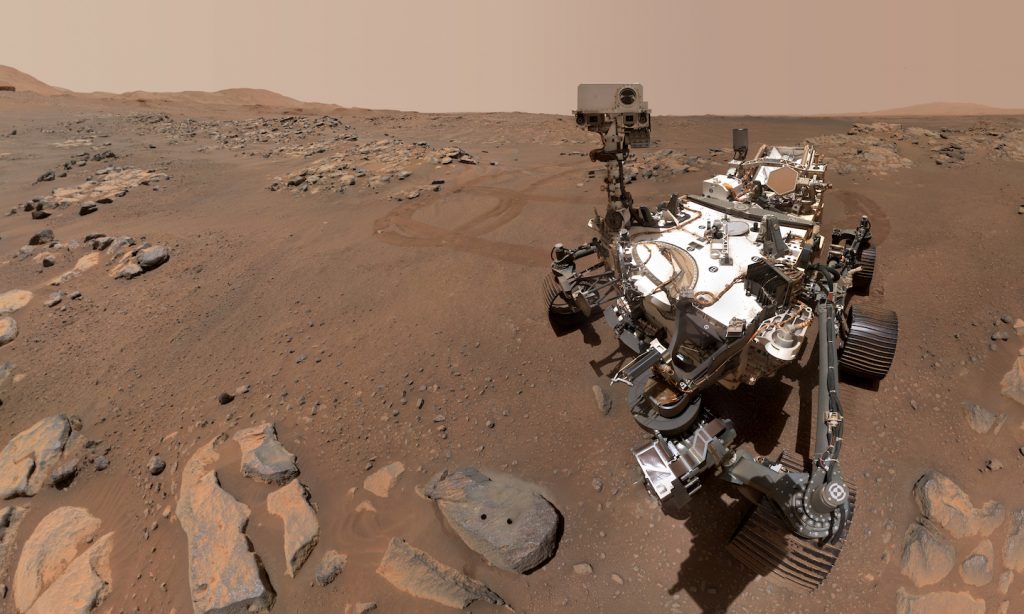
Perseverance and Ingenuity are the current culmination of a long list of missions to Mars. During the first 400 days of operation on the surface of Mars Perseverance has traveled over 12 kilometers and Ingenuity has flown 28+ times. In addition to observations focused on understanding the geologic history and context of four+ samples collected for eventual return to Earth at this time, Perseverance has made a variety of observations of the atmosphere and the moons of Mars. At the time of this presentation we will be well into the exploration of the enormous delta deposited by an ancient river onto the floor of Jezero Crater where Perseverance landed.
Larry S. Crumpler, Ph.D. is Research Curator in Volcanology and Space Sciences at the New Mexico Museum of Natural History and Science. He received his doctorate from the University of Arizona in Planetary Sciences and MS from the University of New Mexico in Geology. Prior to the Museum, he worked at Brown University.
He is a member of the Perseverance Rover Mission science team where he is responsible for geologic context mapping of the terrain traversed by the rover. Previously, he was a team member on Ingenuity helicopter development, Mars Exploration Rover (Spirit & Opportunity) where he served as “Long-term Planning Lead,” Mars Odyssey Gamma Ray Spectrometer, and Mars Reconnaissance Orbiter Camera (HiRISE).
He previously participated in NASA’s Viking and Pathfinder Mars, Magellan mission to Venus, Russian Mars 96 mission planning, Mars landing site selection and rover field tests. He has published numerous research papers, book chapters, and geologic maps; and a book about Mars that will be published by Harper-Collins in late 2021. He is a Fellow of the Geological Society of America.
Views: 3
This minor meteor shower runs Dec. 17-25 and offers about five or 10 an hour. It is produced by dust grains left behind by comet 8P/Tuttle, discovered in 1790. A nearly new moon will mean dark skies to view what could be a good shooting show, and the last one of 2022
Views: 1
Meteor experts say the Geminid meteor shower is hands-down the best in the heavens, producing 120 multicolored meteors at the peak. Produced by debris left behind by the asteroid 3200 Phaethon discovered in 1982, it runs from Dec. 7-17. Moonlight will wash out some of the faintest meteors, but the Geminids are so bright and prolific they should still offer a good show
Views: 3
The Leonids meteor shower runs Nov. 6-30 and puts on an average show of about 15 meteors an hour — except during cyclonic peaks that occur about every 33 years, when hundreds of meteors an hour can be seen. It happened last in 2001, putting us years away from a similar show from this shower created by dust grains left behind by comet 55P/Tempel-Tuttle, discovered in 1865
Views: 4