This is a free and open to the public online event, to attend please register with zoom by clicking here.
The 2nd session of the Beginners Astronomy Class covers the different types of equipment used to observe the night sky, including telescopes, mounts, eyepieces, filters, and advantages and disadvantages of different options.
This session is a must if thinking about buying a telescope.
For details, please visit here and download the sample information PDF package.
Views: 0
This is a free and open to the public online event, to attend please register with zoom by clicking here.
The 1st session of the Beginners Astronomy Class gives a general overview of all of the different objects you can see in the night and day time skies, with some history and information about what they are and their significance. An overview of the current scientific understanding of the Universe’s beginning, present and future is also covered.
For details, please visit here and download the sample information PDF package.
Views: 2
The road has now been fixed and is passable. Thanks to Gary Schones, Bob Peck and any other members who helped out.
Hi if you are planning on going to the Anza site it is not currently accessible. We are trying to get it fixed asap and are in the process of locating a tractor to make the repairs. The driveway entrance to the site has about a 5 foot trench and it is not passable. The area is also very muddy and there is quite a bit of damage along Elder Creek Rd. as well. Lots of pot holes and mud along the entire dirt road at the moment that make it a challenge just to get to the site entrance. I will post more information as I have it. All the tractors seem to be rented out for other repair work and it is currently looking to be sometime the week of Jan. 23-29 before there is one available. Updates will be posted as soon as they are know.
Views: 2
The Board of Directors for the OCA will meet online at 10:30am on January 29, 2023. All current members may attend. Please contact the club secretary for the link to the meeting.
Views: 0
Views: 1
This is a free and open to the public hybrid event, held both inperson and online. Due to the newly effective insurance requirements, we regret that we can not allow people under 18 on the Chapman Campus, they are welcome to attend online.
COSMIC ARTIST:
THE WORK OF JON LOMBERG
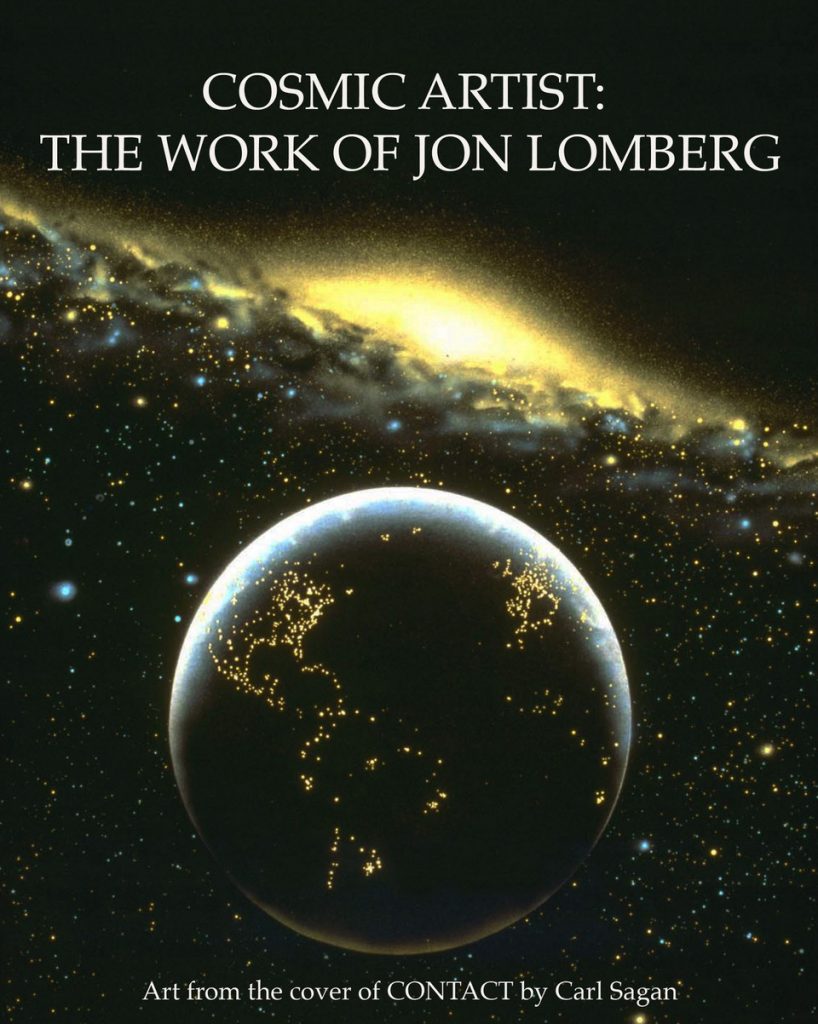
Artist Jon Lomberg will talk about his long career working with Carl Sagan on projects like the Voyager Golden Record, the TV series COSMOS, and the movie CONTACT. He will also discuss work with Mauna Kea observatories and his creation of the Galaxy Garden, the worlds first scale model, walk through galaxy.
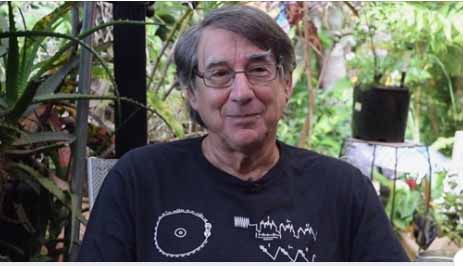
Jo Lomberg is one of the world’s most distinguished space artists. He was Designer of the Voyager Golden Record and Emmy-Award winning Chief Artist of Carl Sagan’s COSMOS series. He is a winner of the ASP’s Klumpke Roberts Award for astronomy popularization and has an asteroid named after him. He lives in Kona, Hawaii.
Special Offer
Jon is offering two of his best-known pieces with Carl Sagan, one from
COSMOS and one from
CONTACT at a special price of $60 (+$15 shipping) each. You can see the details of each by clicking on the respective words. These prints can be ordered directly from Jon at this special members price. Do not order through the website but send payment via PayPal to
lomberg@aloha.net
Views: 2
This is a free and open to the public hybrid event, held both inperson and online. Due to the newly effective insurance requirements, we regret that we can not allow people under 18 on the Chapman Campus, they are welcome to attend online.
Join Zoom
The meeting is held at the Irvine Lecture Hall of the Chapman University, the exact street address can be found on the section above under “VENUE”.
The Voyager Spacecraft
Where they are, how they got there,
and where they are going
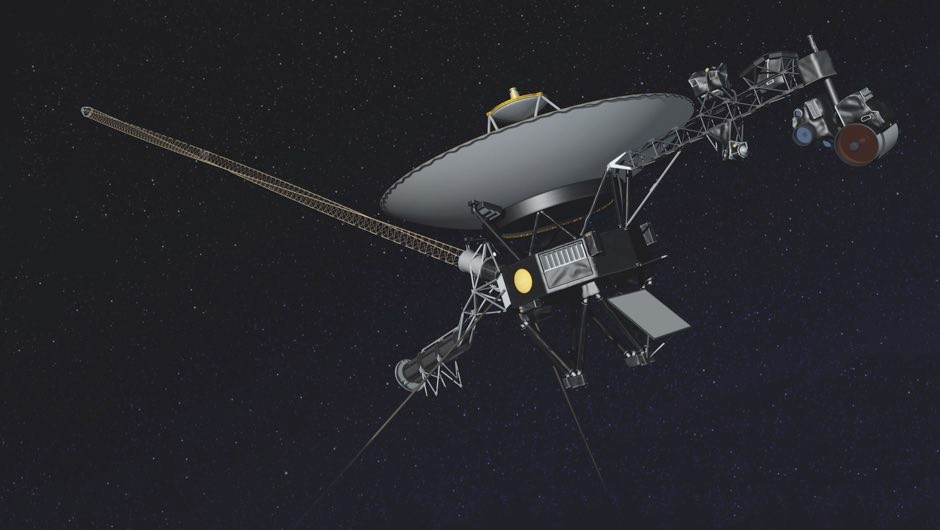
Twin Voyager spacecraft were launched in the summer of 1977 on a four-year mission to study Jupiter, Saturn and their natural satellites. A fortuitous option existed for one of them to continue on to Uranus five years later and Neptune after another three years. Space missions at the time were typically of days to months duration, and technology for even a four-year mission was considered pushing the limits of technology. A 12-year mission was seen as a pipe dream. But the Voyagers were outfitted with some new innovations, and techniques were developed in flight to make enhanced science possible at Uranus and Neptune if they should survive that long. The only thought given to a purpose beyond Neptune was in the form of a video record of sounds, music and greetings from the people of Earth to any intelligent beings that might happen upon the derelict remains of either craft somewhere in the cosmos. As the world has seen, expectations were exceeded beyond anyone’s imagination. The spacecraft are still operating well, with data being transmitted continuously and received daily.
This talk is intended to focus on the spacecraft technologies and highly creative techniques developed in flight, in the hands of a dedicated flight team, that allowed these intrepid explorers to extend their four-year prime mission to 45 years now, with the expectation of another possible five to ten years before they finally succumb to the inevitable loss of enough electrical power to keep them running.
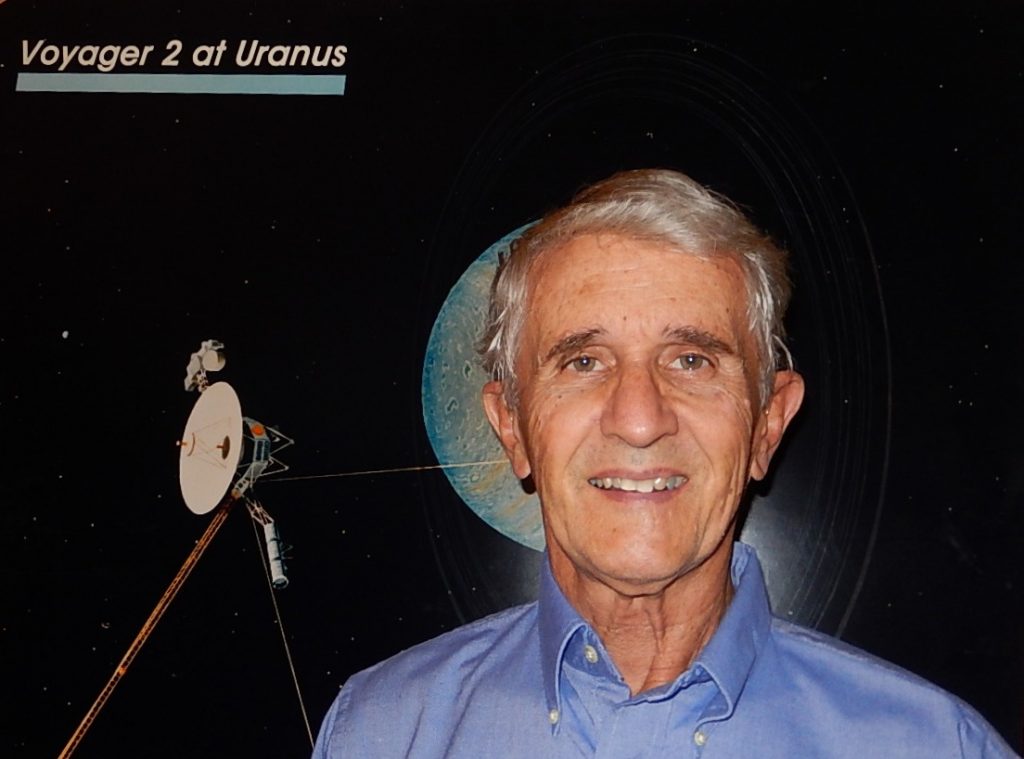
Tim Hogle became hooked on astronomy at age 12 after building a 3″ Newtonian telescope and seeing Saturn with it in the dark skies of his front yard. These interests, astronomy and telescope making, have stayed with him ever since. After graduating in electrical engineering from Cal Poly San Luis Obispo in 1971, he joined the Navy Air Corps as a Naval Flight Officer for a few years, then left the Navy and serendipitously joined JPL and the Voyager flight team shortly after their launches; a dream opportunity to explore the solar system in a detail he never could through a telescope. This was so much fun that he accepted an offer to continue with the team to explore Uranus and Neptune.
Starting as a real time analyst, seeing the data coming in before anyone else saw it, he soon became the senior spacecraft systems engineer, responsible for a wide variety of duties including data and anomaly analysis, sequence, test, and contingency planning, and being involved in nearly all aspects of the mission. By the Neptune encounter, the Voyagers were as close as family members to him, and Tim wanted to continue using his years of experience to extend the mission as long as possible. His total time with Voyager was 27½ years. He has been retired since 2006, but kept in touch with former colleagues on the flight team to keep abreast of the progress of the Voyagers in his absence. In retirement, his astronomical interest has continued with visual observing at every opportunity, especially of faint galaxies through an 18″ telescope.
Views: 3