This is a free and open to the public online event.
Come and socialize with your fellow astronomy enthusiasts face-to-face virtually!
Bring your latest astrophotography, mini-presentation, questions or none and your own refreshments.
Views: 2
This is a free and open to the public online event.
Come and socialize with your fellow astronomy enthusiasts face-to-face virtually!
Bring your latest astrophotography, mini-presentation, questions or none and your own refreshments.
Views: 1
This is a free and open to the public online event.
Come and socialize with your fellow astronomy enthusiasts face-to-face virtually!
Bring your latest astrophotography, mini-presentation, questions or none and your own refreshments.
Views: 0
This is a free and open to the public online event.
Come and socialize with your fellow astronomy enthusiasts face-to-face virtually!
Bring your latest astrophotography, mini-presentation, questions or none and your own refreshments.
Views: 0
This is a free and open to the public hybrid event, held both inperson and online. Due to the newly effective insurance requirements, we regret that we can not allow people under 18 on the Chapman Campus, they are welcome to attend online.
Observing the universe in the Ultraviolet
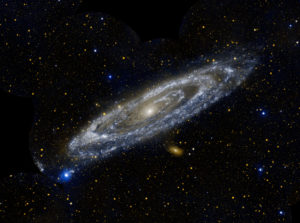
Prof. Hamden is a telescope builder, with a focus on UV astronomy and developing new detector technology. She will describe why the UV is so interesting scientifically and why is it criminally understudied. She will also discuss her own work on several different UV missions in development, including FIREBall-2 and Aspera.

Dr. Erika Hamden is a professor of astrophysics at the University of Arizona. She specializes in building telescopes that go into space and the stratosphere, and developing technology to make telescopes better. Erika is a leader in the field of space astrophysics, and has developed programs to teach early career scientists how to develop their own space missions. She is the deputy principal investigator of Aspera, a NASA orbiting telescope in development. She is a former chef, a TED Fellow, a AAAS If/then Ambassador, an aspiring astronaut, and is working on her pilots license.
Views: 4
This is a free and open to the public hybrid event, held both inperson and online. Due to the newly effective insurance requirements, we regret that we can not allow people under 18 on the Chapman Campus, they are welcome to attend online.
Puzzles in Galaxy Evolution
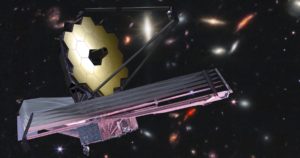
I will describe a pair of sharp puzzles suggesting a possible mismatch between our theory of galaxy evolution and recent observations from the James Webb Space Telescope (JWST). First, current models predict that most distant galaxies found by JWST should be seen at a time when they are transitioning from the initial assembly of their ingredients to the later processes by which they form stars, and other structures we recognize as a galaxy. Instead, fully-formed, massive galaxies appear to exist impossibly early, before their ingredients should even have been able to assemble. Second, a possible explanation for this would be that most galaxies grow very differently from the processes we have observed in star-forming regions of our own Milky Way. I will discuss whether such a difference might be able to reconcile both problems, or whether something is still “broken”.
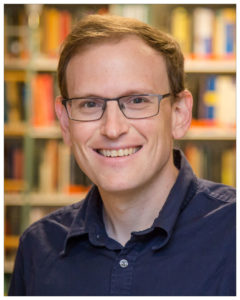
Charles Steinhardt is an associate professor at the Cosmic Dawn Center and University of Copenhagen, having previously spent time at Caltech, Kavli IPMU, Harvard, and Princeton. His research is inspired by astrophysical phenomena whose explanation has been cast into doubt, either by new theoretical ideas or new observations. Recently, this includes several different areas of astronomy and astrophysics, including galaxy evolution, black hole accretion, and gamma-ray bursts. Recent work also includes developing machine learning and statistical methods for making full use of the large datasets modern astronomy produces. He also runs a summer undergraduate research program that brings American students to Copenhagen each summer.
Views: 4
This is a free and open to the public event (in person event only)
The 6th session of the Beginners Astronomy Class covers the basics of astrophotography, covering different types of imaging, how different types of cameras are used for this kind of photography, and other equipment and considerations for taking a good picture.
This session is taught by Kyle Coker, who is active in the club’s AstroImaging special interest group.
Free and open to the public as well as members of OCA.
For details, please visit here and download the sample information PDF package.
Views: 1
This is a free and open to the public event (In-person event only).
The 5th session of the Beginners Astronomy Class is the “How to Use Your Telescope”.
If you have a telescope and would like some help learning to set it up and use it, attend this Hands-on class.
For details, please visit here and download the sample information PDF package.
Views: 3
This is a free and open to the public online event, to attend please register with zoom by clicking here.
The 4th session of the Beginners Astronomy Class covers the science behind the telescope.
How do our eyes actually perceive objects we see in the telescope and what is the physics that allows that perception.
For details, please visit here and download the sample information PDF package.
Views: 2
This is a free and open to the public online event, to attend please click here at or after 7:10pm.
The 3rd session of the Beginners Astronomy Class covers different methods of finding objects in the night sky. Special topic is learning the constellations.
For details, please visit here and download the sample information PDF package.
Views: 1
