This is a free and open to the public online Zoom event, to attend please click here at or after 7:10pm
The 1st session of the Beginners Astronomy Class gives a general overview of all of the different objects you can see in the night and day time skies, with some history and information about what they are and their significance. An overview of the current scientific understanding of the Universe’s beginning, present and future is also covered.
For details, please visit here and download the sample information PDF package.
Views: 1
Our annual Star-B-Que and star party at the Anza site for members and their guests. The Star-B-Que is a pot luck early dinner, so please bring something to share with your fellow astronomers. It will be held at 5pm up at the club obsrevatory.
Views: 3
New moon weekend and the Anza start party for members and their guests.
Views: 3
The next OCA board meeting will be held via zoom on July 30, 2023 at 11:30am. Any member is welcome to attend please contact Alan Smallbone for more information.
Views: 1
This is a free and open to the public hybrid event, held both inperson and online. Due to the newly effective insurance requirements, we regret that we can not allow people under 18 on the Chapman Campus, they are welcome to attend online.
Throwing DART(s) at Asteroids
NASA’s First Planetary Defense Mission
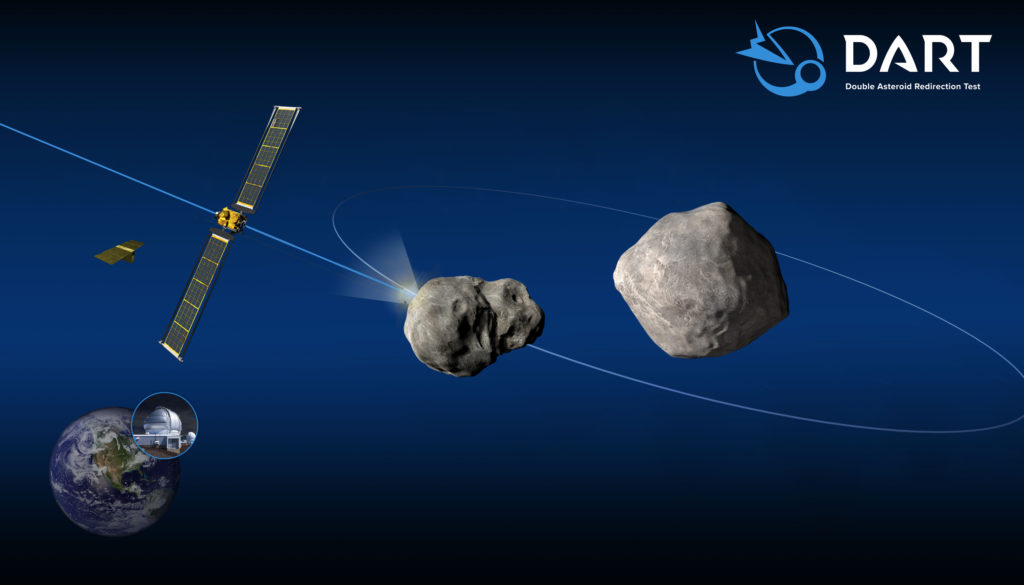
On September 26, 2022, NASA intentionally smashed the DART spacecraft into an asteroid as humanity’s first test mission for planetary defense. The Double Asteroid Redirection Test (DART) spacecraft’s collision with its target asteroid, which poses no threat to Earth, changed the asteroid’s motion in a way that can be measured using ground-based telescopes, including those of Las Cumbres Observatory.
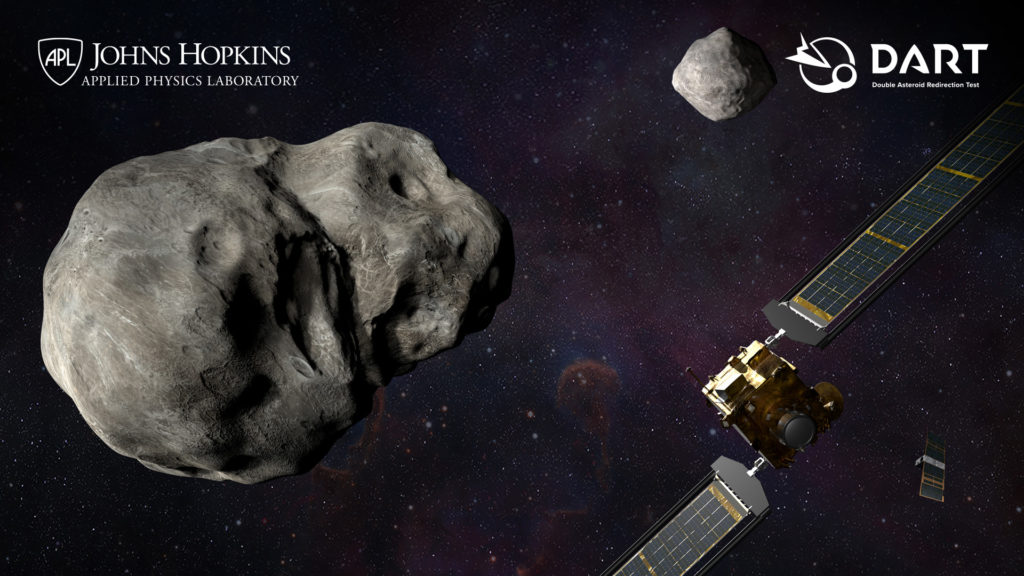
In this talk, Dr. Tim Lister will describe near-Earth asteroids, impact hazards, and what the DART mission will do to prepare for potentially deflecting asteroids in the future.
Dr Tim Lister joined Las Cumbres Observatory (LCO) as a project scientist in 2007 and is now a Staff Scientist. He specializes in the observation and characterization of small Solar System bodies, particularly comets and Near Earth Asteroids. He received a M. Sci in Astrophysics from the University of St Andrews in 1997 and a Doctorate in Astrophysics on the study of magnetic activity on variable stars in 2000, also from the University of St Andrews. Following his doctorate, he was a founding member of the
SuperWASP transit survey searching for extrasolar planets, specializing in building data processing pipelines for analyzing the survey data, for which he received the RAS Group Achievement Award. Since joining LCO, he has worked on building pipelines and data archives for the observatory, confirming new transiting extrasolar planets and building a new science group for the study of Solar System objects. In the course of this research, he has developed web-based software to allow the scheduling and analysis of observations of Solar System objects using the telescopes of the LCO Network. He is currently Co-lead of the LCO Outbursting Objects Key (LOOK) Project to study the behavior of comets for ESA’s Comet Interceptor mission and a member of NASA’s Double Asteroid Redirection Test (DART) Investigation Team.
Views: 0
The OCA board is meeting via zoom on Sunday May 7,2023 at 11:30am. The meeting is open to all current members. If you would like to attend contact Alan Smallbone.
Views: 2
This is a free and open to the public hybrid event, held both inperson and online. Due to the newly effective insurance requirements, we regret that we can not allow people under 18 on the Chapman Campus, they are welcome to attend online.
The Mystery Behind the Origin of
Radio Filaments in our Milky Way Galaxy
The Galactic center is an active region of our Milky Way Galaxy. There is a supermassive black hole at the center of the Galaxy.
Beyond its sphere of influence, there is a rich environment revealing relic of past activities of the black hole.
As part of an international team, observations with the new South African MeerKAT observatory has discovered hundreds of
magnetized thread-like filaments in the inner 1000 light years of the region surrounding the black hole at the Galactic center. These filaments appear
harp-like, commentary tail-like, or loop-like structures. After a brief history of the discovery of radio filaments in
the 80’s, the nature and origin of these structures will be discussed with an emphasis of why it is so puzzling
to understand their origin.
F. Zadeh received his PhD in Astronomy from Columbia University in 1986 before he went to NASA/Goddard Space Flight center as a National Research Council postdoc. He then joined the department of physics and astronomy at Northwestern University in 1989 and has been there since. His research interests are the black hole at the center of the Galaxy, star formation and cosmic-ray physics.
Views: 3
The monthly meeting of the Astrophysics Special Interest Group is at 7:00 PM every third Friday of the month at the Heritage Museum of Orange County. Please contact the ASIG chair for details at mark@ocastronomers.org .
Views: 0
The Board of Directors for the OCA will meet online at 10:30am on March 05, 2023. All current members may attend. Please contact the club secretary for the link to the meeting.
Views: 1
