This event is free and open to public, to attend please use the zoom registration link on the box above.
Come and socialize with your fellow astronomy enthusiasts face-to-face virtually!
Bring your latest astrophotos, mini-presentation, questions or none and your own refreshments.
Views: 5
This event is free and open to public, to attend please use the zoom.us link on the box above.
Uncovering the Death Throes of Massive Stars Through Supernovae
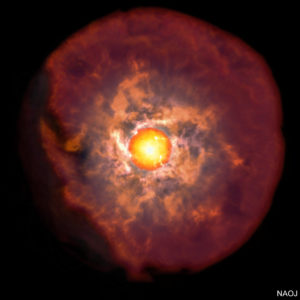
Stars more massive than about 10 solar masses explode at the end of their life and die as supernovae. How massive stars look like when they explode? Astronomers try to answer this question through supernovae. It has been recently recognized that massive stars seem to have an unexpectedly active life just before they explode. In this talk, I will introduce supernovae and what they tell us about the “death throes” of massive stars.
Takashi Moriya
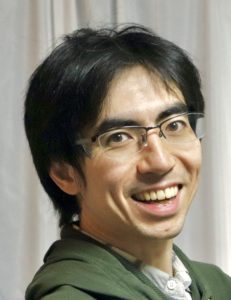
I am an Assistant Professor at National Astronomical Observatory of Japan (NAOJ). I was born and grew up in Tokyo, Japan. I received my PhD in Astronomy from the University of Tokyo in 2013. I worked at University of Bonn in Germany as a postdoctoral research fellow from 2013 to 2016 and moved to NAOJ in 2016. My research interest is mainly in theoretical aspects of supernovae and stellar evolution, but I also work on observational astronomy using the Subaru telescope operated by NAOJ.
Views: 3
RSVP using the link on the box above.
Please install/update zoom client prior to the event.
Come and socialize with your fellow astronomy enthusiasts face-to-face virtually!
Bring your latest astrophotos, mini-presentation, questions or none and your own refreshments.
Views: 2
The OCA board meeting will be at 10:30am and is open to all members. Contact Alan Smallbone the OCA secretary for more information and the link to join the online zoom meeting.
Views: 4
RSVP using the link on the box above.
Please install/update zoom client prior to the event.
Cosmic Dawn: The Birth of Galaxies in our Universe
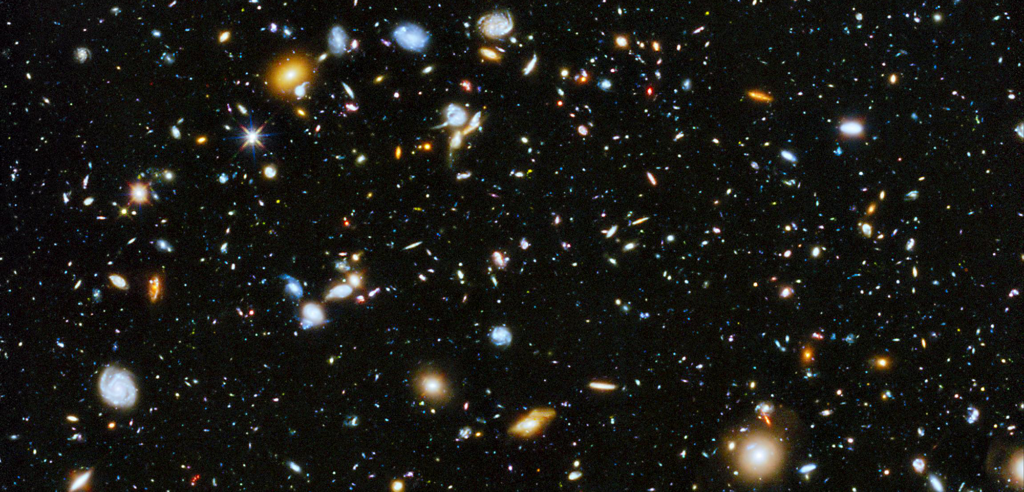
The Milky Way is but one of an estimated two trillion galaxies in our observable Universe. Modern astronomical telescopes have revealed a rich ecosystem of galaxies, but our Universe wasn’t always that way. In fact, there was a time when galaxies did not exist. In this talk, I will describe how astronomers are trying to unravel the mystery of how and when the first galaxies formed.
Anson D’Aloisio
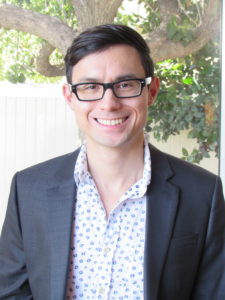
I am an Assistant Professor in the Physics & Astronomy Department at UC Riverside. My research interests are in the fields of theoretical astrophysics and cosmology. I am particularly interested in the formation of structures in the Universe (e.g. galaxies and galaxy clusters), the epoch of reionization, and gravitational lensing. I was born and raised in Middletown, Connecticut. I did my undergraduate work at the University of California, Riverside, where I received my B.S. in Physics (minor in Math) in 2005. I went to graduate school at Yale University and received my Ph.D. in Physics in 2011. From there, I took postdoctoral positions at the University of Texas at Austin, and the University of Washington.
Views: 7
On Friday, July 3 is the OCA “How to use your telescope” session. Due to COVID-19, we will not hold this class at the Heritage museum in Santa Ana. Therefore, OCA will host a virtual class using the program Zoom. The class will consist of several telescope live demos and then open up to anyone to talk about their telescope issues. This can be either a verbal question or a live showing of the telescope and the problems or questions about it.
I am requesting OCA volunteers who would like to assist by hosting a live 10-15 min talking session from their home about “How to use a telescope” for one of the following scope types;
1) Dobsonian, no encoders
2) Motorized Newtonian or refractor (not go-to)
3) Go-to Alt-AZ
4) Go-to Equatorial
If you would like to volunteer, please contact David Pearson at p.davidw@yahoo.com or by cell phone (714) 293-5684.
Additional info for those interested:
I would recommend for the live session a discussion of the following topics;
- Introduce yourself, your scope type and then describe all of the scope components. Show the components if not setup and then assemble the scope with commentary, or if already setup, describe how the components were assembled, and in which order. If setting up the scope, beware of time it takes to assemble. Also provide the approximate weight of the components and/or total weight assembled
- Then describe the necessary steps to start viewing, (i.e., mount/tripod initial setup alignment/direction if required, balancing the scope, finderscope/main scope alignment, star align if necessary, which eyepieces to use and why, any power accessories, how to move the scope, and how to find objects with the scope)
- Objects you would recommend for beginners to observe if using your scope type.
Note that the folks watching/listening may be beginners and may have very little knowledge about telescopes or maybe no knowledge at all.
David Pearson
Views: 6
This event is free and open to public, to attend please use the zoom registration link on the box above.
Solar Eclipses: Math, Science, and Spectacle
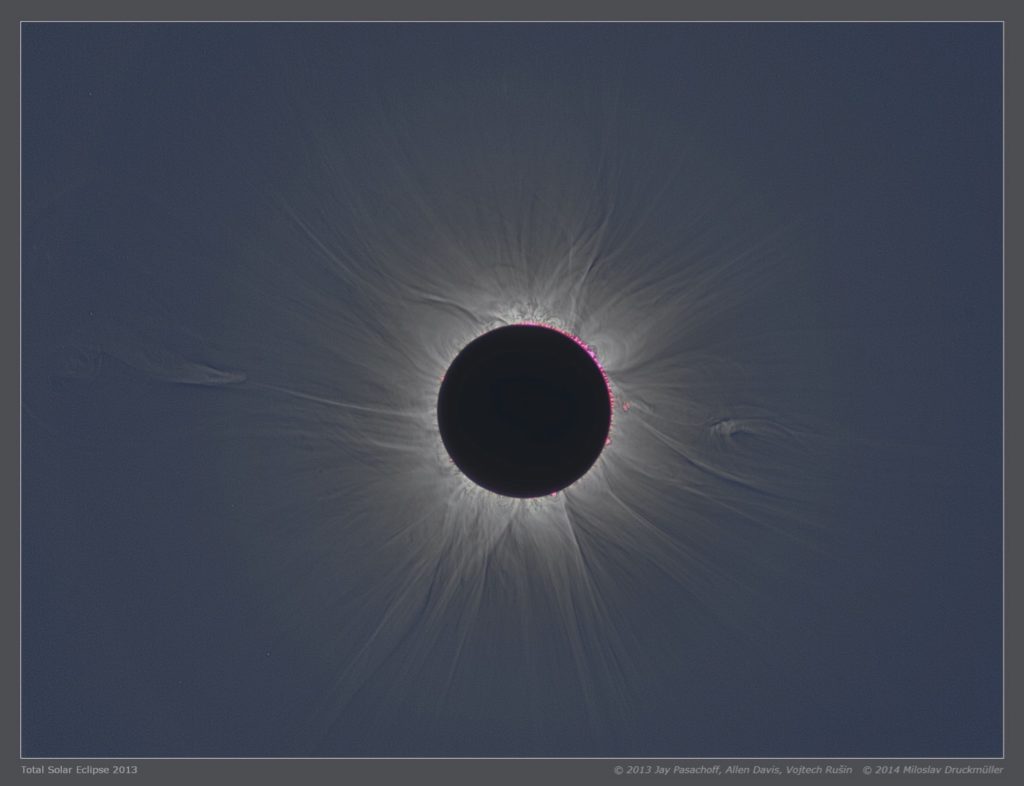
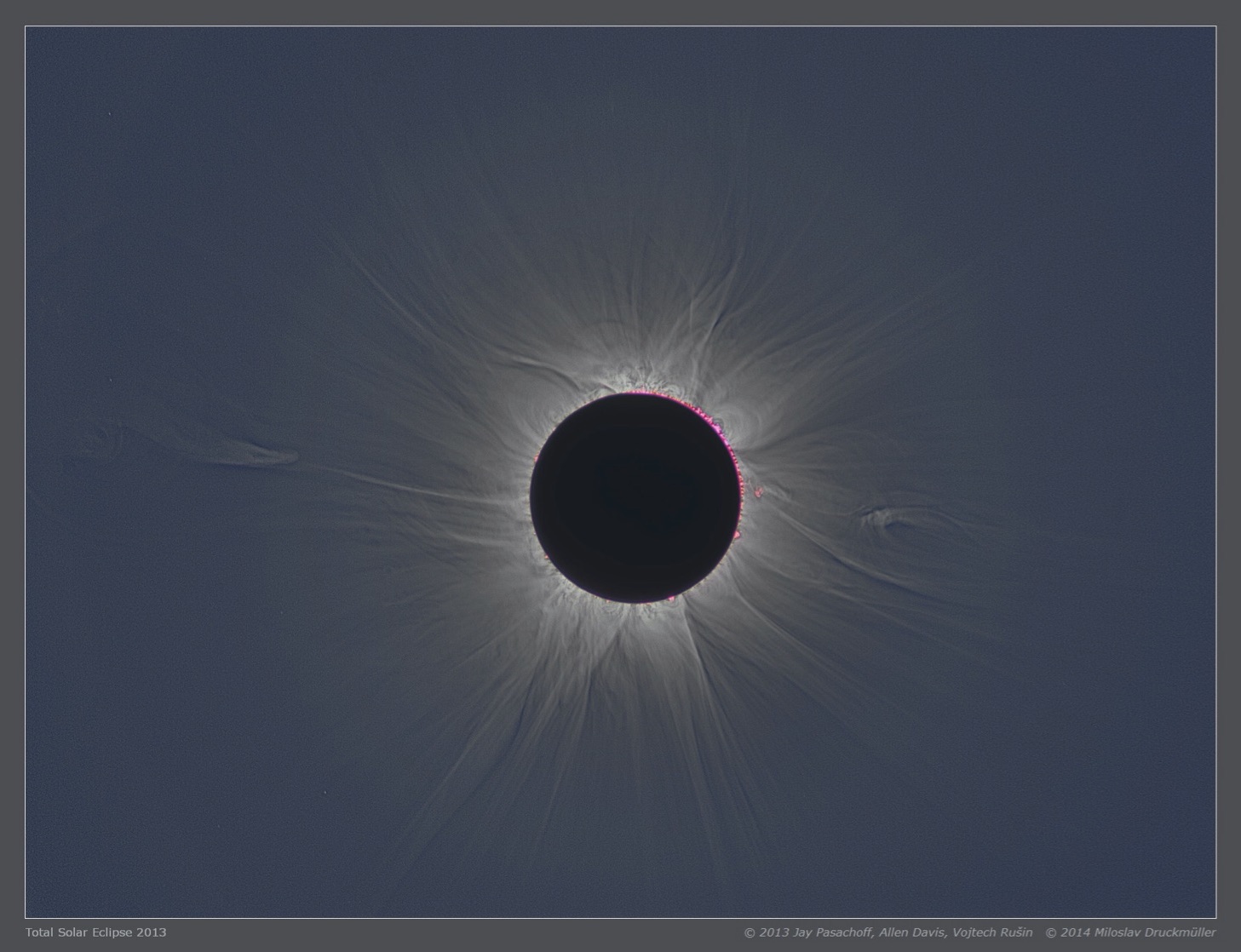
A composite image of the 2013 total solar eclipse at solar maximum. (Photos by Jay Pasachoff, Allen Davis, and Vojtech Rusin; computer compositing by Miloslav Druckmüller)
As a veteran of 72 solar eclipses —including 35 total solar eclipses, 18 annular solar eclipses, and 19 partial solar eclipses— astronomer Jay Pasachoff is uniquely positioned to share recent scientific work related to eclipses, international coordination of observations, and future plans. What role does mathematics play in predicting eclipses, from the ancient saros observations to Halley’s 1715 map, and up to today’s web-based zoom-and-click maps? How do theoretical predictions based on magnetic-field measurements, emission spectra of high ionization lines, and radio observations compare to the high res images available today?
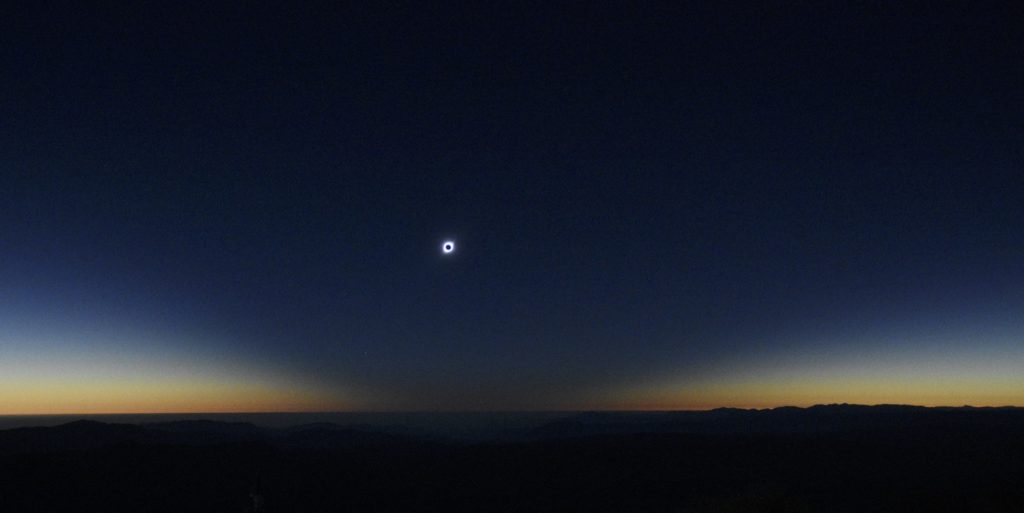
The sky with the total eclipse corona and the umbra during the July 2, 2019, total solar eclipse photographed from the Cerro Tololo Inter-American Observatory, Chile (David Sliski, as part of the Williams College Expedition).
The beautiful streamers that become dramatically visible during an eclipse’s totality are shaped by the solar corona’s magnetic field. How do theoretical predictions based on magnetic-field measurements, emission spectra of high ionization lines, and radio observations compare to the high res images available today?
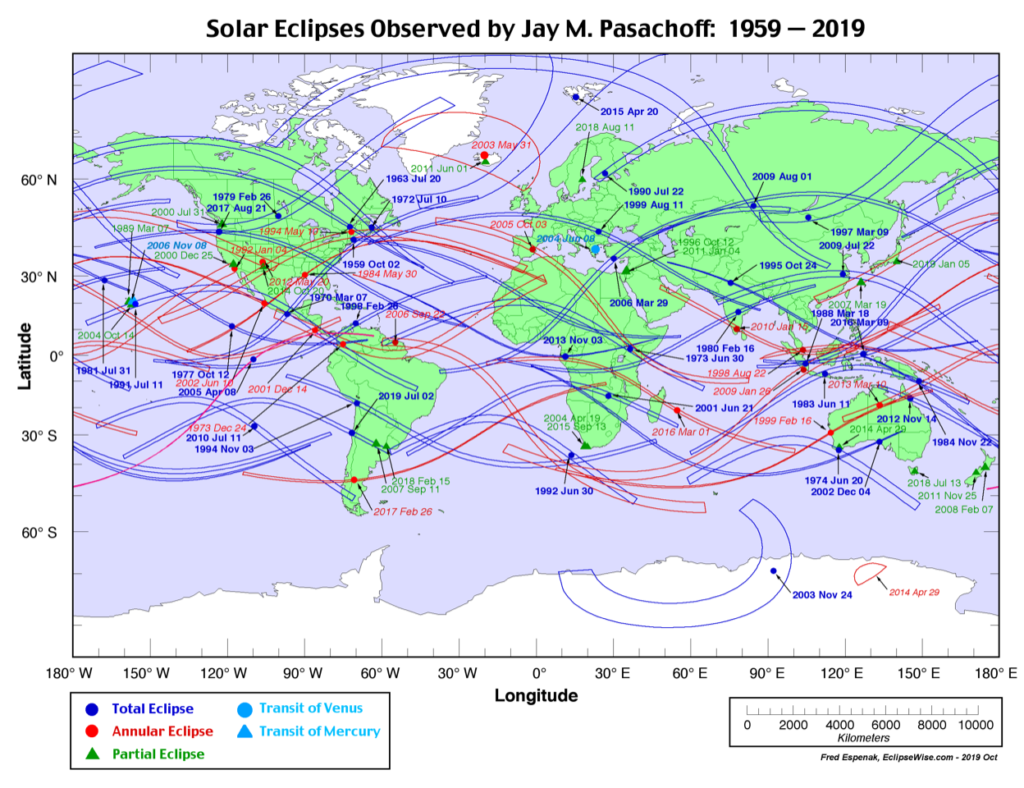
I will discuss my expeditions to recent solar eclipses, including total eclipses in the United States in 2017 and in Chile in 2019, as well as the annular solar eclipse in India in 2019. I will also discuss the next solar eclipses, including Chile and Argentina on December 14, 2020, and Mexico/United States/Canada on April 28, 2024, and the October 14, 2023, annular eclipse for which the partial-eclipse coverage of the Sun’s diameter from Orange County will be 78%. I will emphasize current topics of research of current solar eclipses, and how they link with the Sun-Earth connection and our understanding of the coronas of trillions of other stars.
Jay Pasachoff
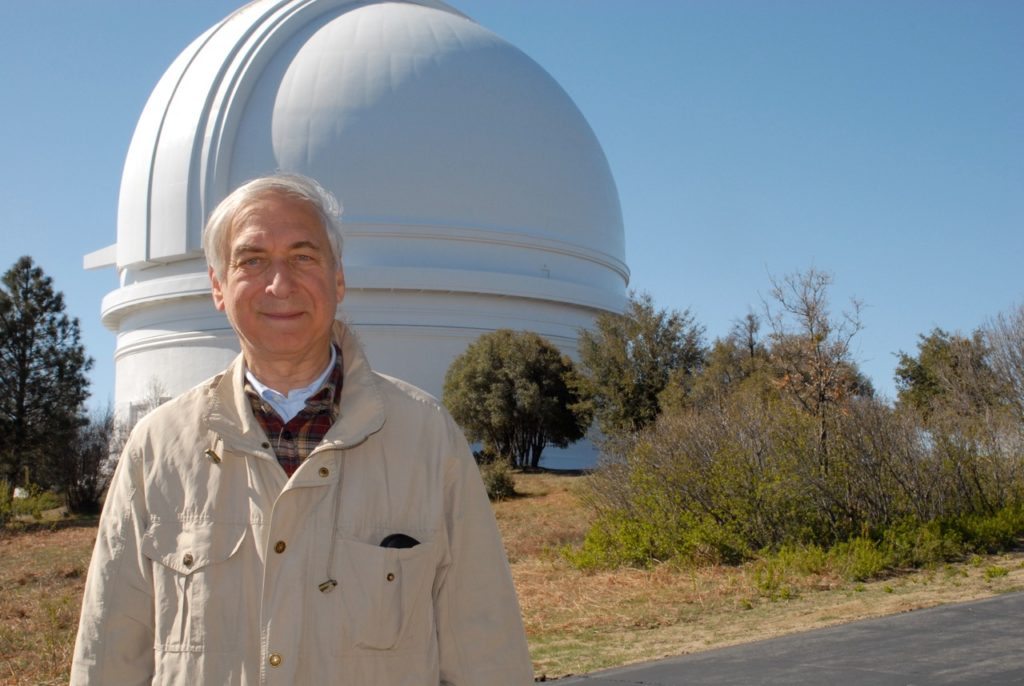
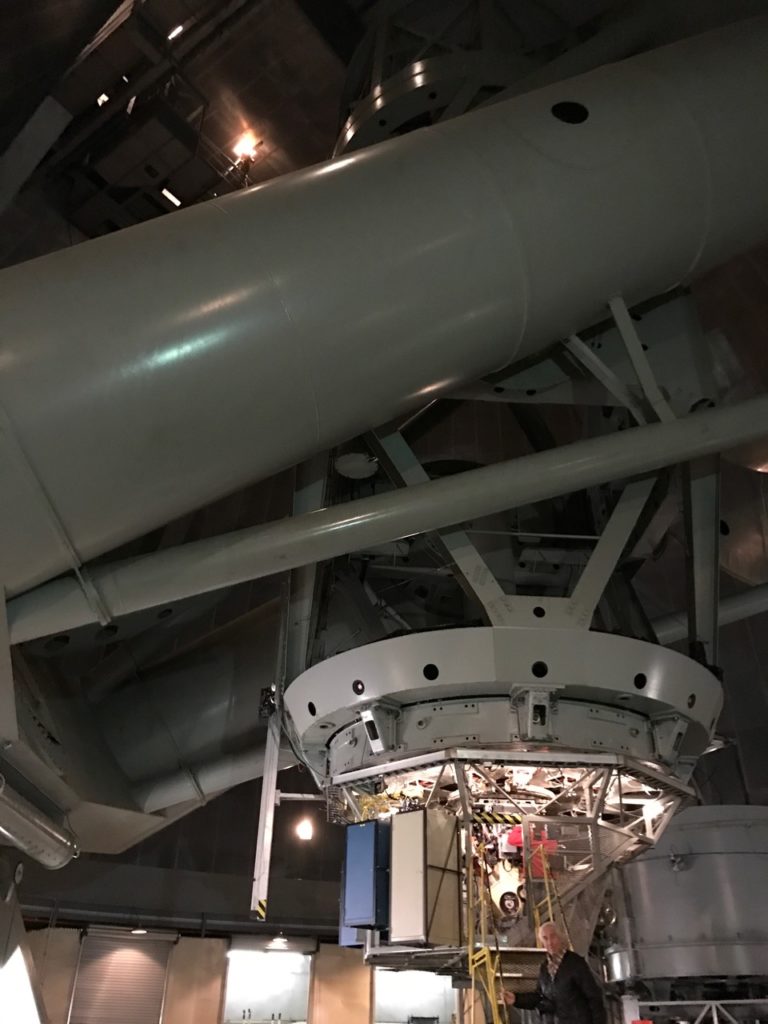
Jay Pasachoff is Field Memorial Professor of Astronomy and Director of the Hopkins Observatory at Williams College, Williamstown, Massachusetts, and a Visiting Scientist at Carnegie Observatories. (Prior to his Williams College appointment, he was a postdoctoral fellow at Caltech and what was then called the Hale Observatories—Mt. Wilson and Palomar.) A veteran of 72 solar eclipses, he is Chair of the International Astronomical Union’s Working Group on Solar Eclipses and a member of the American Astronomical Society’s Solar Eclipse Task Force.
His recent research includes studies of the dynamics of the solar corona studied from the ground at eclipses and from spacecraft, and the temperature and structure of the corona over the solar-activity cycle from images and spectra. He also studies the atmosphere of Pluto through observation of stellar occultations and participated in the occultation study of Arrokoth that led to the diversion of NASA’s New Horizons spacecraft to image it on January 1, 2019, with the farthest-from-Earth photograph ever taken. His current eclipse research is supported by the Solar Terrestrial Program of the Atmospheric and Geospace Sciences Division of the U.S. National Science Foundation. His Pluto/Arrokoth research has been supported by NASA.

Pasachoff received the 2003 Education Prize of the American Astronomical Society, the 2012 Janssen Prize of the Société Astronomique de France, the 2015 Richtmyer Lecture Award from the American Association of Physics Teachers, and the 2019 Klumpke-Roberts Award from the Astronomical Society of the Pacific.
Views: 3
An online talk open to all in which Kin Searcy, one of the Palomar Docents, will survey the many questions in astronomy that have been addressed for the last 70 years by professional researchers at Palomar Observatory.
Use the link on the top box to join.
Zoom Meeting ID: 996 5232 6483
Views: 1
Come and socialize with your fellow astronomy enthusiasts face-to-face at this online meeting!
Bring your latest AstroPhotos or questions or mini-presentation.
This event was created as a response to those who missed the social interaction opportunity provided at our in-person general meetings.
Views: 3