This is an online event, to attend please register with zoom using the link on the box above.
State of the Universe Report
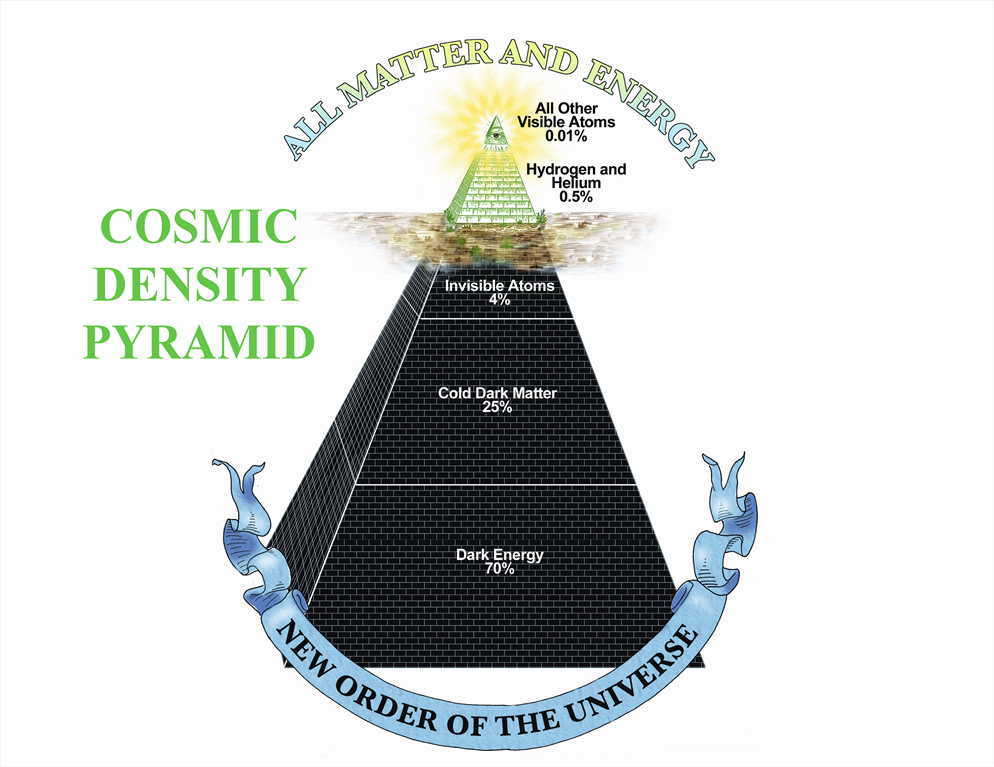
This lecture will discuss the current understanding and the latest discoveries regarding cosmology—the science of the universe as a whole—and galaxies and planets. There is overwhelming evidence that most of the density of the universe is invisible dark matter and dark energy, with atomic matter making up only about five percent of cosmic density. UC Santa Cruz cosmologists helped to create the standard modern cosmological theory—but the latest high-precision measurements have revealed potential discrepancies that may require new physics. Galaxies were long thought to start as disks of gas and stars, but observations by Hubble Space Telescope show that most galaxies instead start pickle-shaped. More massive galaxies have massive black holes at their centers, and matter falling onto these black holes causes outflows of energy that can strongly affect their host galaxies. Information about planetary systems is growing rapidly with new observations, and our own solar system seems increasingly to be unusual.
Joel R. Primack
Joel R. Primack specializes in the formation and evolution of galaxies and the nature of the dark matter that makes up most of the matter in the universe. After helping to create what is now called the “Standard Model” of particle physics, Primack began working in cosmology in the late 1970s, and he became a leader in the new field of particle astrophysics. His 1982 paper with Heinz Pagels was the first to propose that a natural candidate for the dark matter is the lightest supersymmetric particle. He is one of the principal originators and developers of the theory of Cold Dark Matter, which has become the basis for the standard modern picture of structure formation in the universe. With support from the National Science Foundation, NASA, and the Department of Energy, he has been using supercomputers to simulate and visualize the evolution of the universe and the formation of galaxies under various assumptions.
Here’s the link to a recording of my 10 November 2020 UCSC Emeriti Research Lecture “State of the Universe Report: Cosmos, Galaxies, Planets” on YouTube:
Here are some of my recent research results that may be of wider interest:
— Local measurements of the the Hubble parameter give H_0 = 73 ± 1 km/s/Mpc, while measurements of the Cosmic Microwave Background extrapolated to the present with the standard ΛCDM cosmology give H_0 = 67 ± 0.5 km/s/Mpc. This “Hubble tension” could be resolved if there was a brief period when dark energy contributed about 10% to the cosmic density about 35,000 years after the Big Bang. I initiated the first N-body simulations with this Early Dark Energy (EDE) cosmology. Our paper on this
https://arxiv.org/pdf/2006.14910.pdf was led by Anatoly Klypin. We found that EDE predicts 50% more rich clusters of galaxies at redshift z=1 than standard ΛCDM, and many more galaxies at higher redshifts. These predictions will be tested by new astronomical surveys now underway. We are resubmitting the paper to MNRAS in response to a favorable referee report, so it will be published soon. We are setting up to run 500 Mpc/h paired simulations with Bolshoi resolution of standard ΛCDM and EDE; the use of the same random number seed will ensure that all the large-scale structures will correspond in these simulations. We plan to do abundance matching with both simulations, to fill all the halos with UniverseMachine and Santa Cruz SAM galaxies, and to compare with observations.
— I initiated a paper that shows that Earth may be a “Goldilocks” planet in a new way, with enough radioactive heat generation to power plate tectonics and not too much to kill the geodynamo generating the Earth’s magnetic field. Tectonics and a magnetic field may both be necessary for the evolution of complex life. Earth’s radioactive heat is generated by the two longest-lived radioactive elements thorium and uranium, which are produced in extremely rare events such as neutron-star mergers — as a result, the amount of Th and U varies a lot between different planetary systems. Our paper, led by my UCSC colleague Francis Nimmo, was published November 10
with some popular articles at
— I’ve continued to make novel uses of machine learning to compare simulations with observations and to analyze observations. My group’s latest papers on this focused on giant clumps found in HST images of most redshift z > 1 star-forming galaxies. In
https://ui.adsabs.harvard.edu/abs/2020MNRAS.499..814H we trained a CNN to measure the masses of giant clumps; we made public our analysis of the entire CANDELS galaxy dataset, and we used a complete set from GOODS-N and S with 7 wavebands to measure clump properties as functions of galaxy properties including sSFR, radius, and stellar mass. In
https://ui.adsabs.harvard.edu/abs/2020arXiv201106616G we trained a CNN to measure the lifetimes of the clumps in the CANDELS data; this paper was just accepted for publication. Our earlier paper that made extensive use of machine learning to compare HST observations with theory was profiled in
https://news.ucsc.edu/2018/04/deep-learning-galaxies.html
Views: 2
RSVP using the zoom.us link on the box above.
Please install/update zoom client prior to the event.
This is the “How to Use Your Telescope” session of the Beginners Astronomy Class. If you have a telescope and would like some help learning to set it up and use it, attend this on-line class.
For details, please visit here.
Free and open to the public as well as members of OCA.
Views: 2
This event is free and open to public; to attend please register using the zoom.us link on the box above.
The 6th session of the Beginners Astronomy Class covers the basics of astrophotography, covering different types of imaging, how different types of cameras are used for this kind of photography, and other equipment and considerations for taking a good picture.
This session is taught by Kyle Coker, who is active in the club’s AstroImaging special interest group.
Free and open to the public as well as members of OCA.
Views: 3
This event is free and open to public, to attend please register using the zoom.us link on the box above.
Come and socialize with your fellow astronomy enthusiasts face-to-face virtually!
Bring your latest astrophotos, mini-presentation, questions or none and your own refreshments.
Views: 45
This is an online event held by OCA for VCAS.
No prior registration is required but when entering the webinar, zoom will ask for your name and email.
At the time of the meeting, to attend via zoom app click here, via your browser click here.
To install the zoom app click here.
Views: 3
This is an online event held by OCA for VCAS.
No prior registration is required but when entering the webinar, zoom will ask for your name and email.
At the time of the meeting, to attend via zoom app click here, via your browser click here.
To install the zoom app click here.
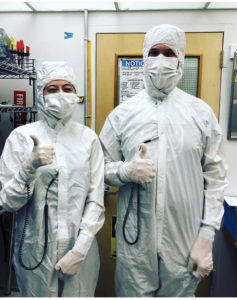
Molly Shelton is a Power Systems Engineer at Jet Propulsion Laboratory in Pasadena. She is an early career hire, graduating from college with a BS in Physics in 2016 and joining the Power and Sensor Systems group to design, build and test hardware for missions all throughout the solar system. She has worked on a handful of projects in her 4 years at JPL including Dawn, SHERLOC, and Europa Clipper. She started her path to JPL in a high school robotics club and is honored to be able to share her story thus far with those who yearn for the stars in the same way.
Views: 9
This event is free and open to public, to attend please register using the zoom.us link on the box above.
Come and socialize with your fellow astronomy enthusiasts face-to-face virtually!
Bring your latest astrophotos, mini-presentation, questions or none and your own refreshments.
Views: 1
This is an online event held by OCA for VCAS.
No prior registration is required but when entering the webinar, zoom will ask for your name and email.
At the time of the meeting, to attend via zoom app click here, via your browser click here.
To install the zoom app click here.
2020: A Year of Perseverance and Ingenuity
Sarah Elizabeth McCandless
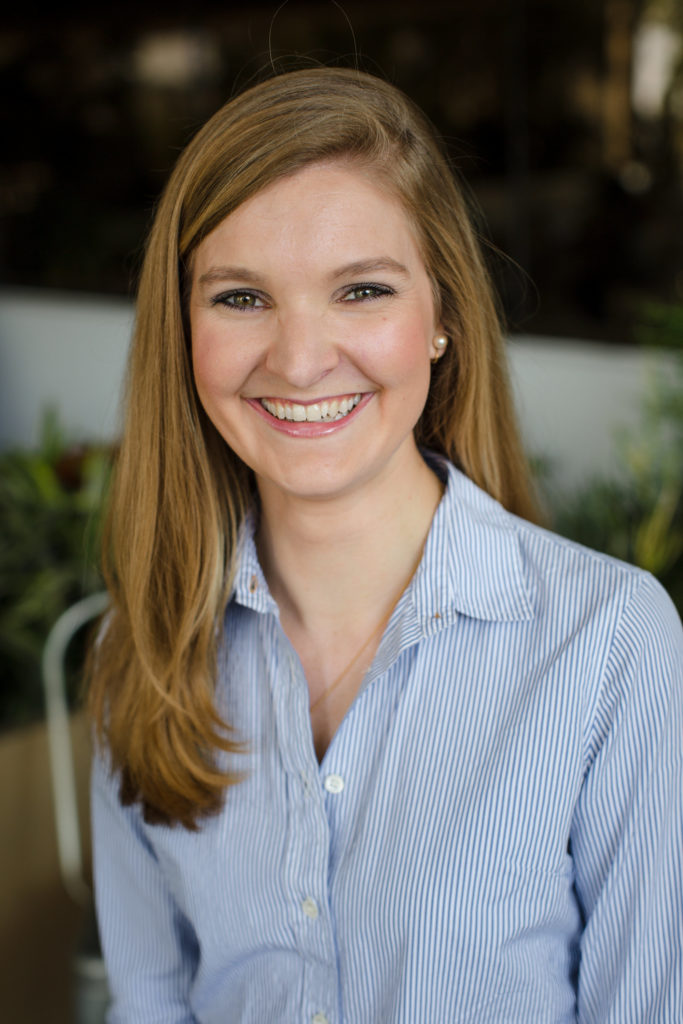
Sarah Elizabeth McCandless works for the Jet Propulsion Laboratory (JPL) as a navigation engineer. She performs operational as well as pre-launch orbit determination analyses and has worked on a variety of flight projects including MAVEN (Mars Atmosphere and Volatile Evolution), InSight, Mars 2020, and Europa Clipper. She also develops multi-mission software tools and has researched the feasibility of using optical communication observables for deep-space navigation. She earned a B.S. in aerospace engineering and a minor in French at the University of Kansas. Subsequently, she earned an M.S. in aerospace engineering from the University of Texas. Outside of work, Sarah Elizabeth enjoys flying Cessna 172s, hiking, and reading.
Views: 3
This is an online event, to attend please register with zoom using the link on the box above.
NASA’s New Horizons Mission to Pluto and Beyond
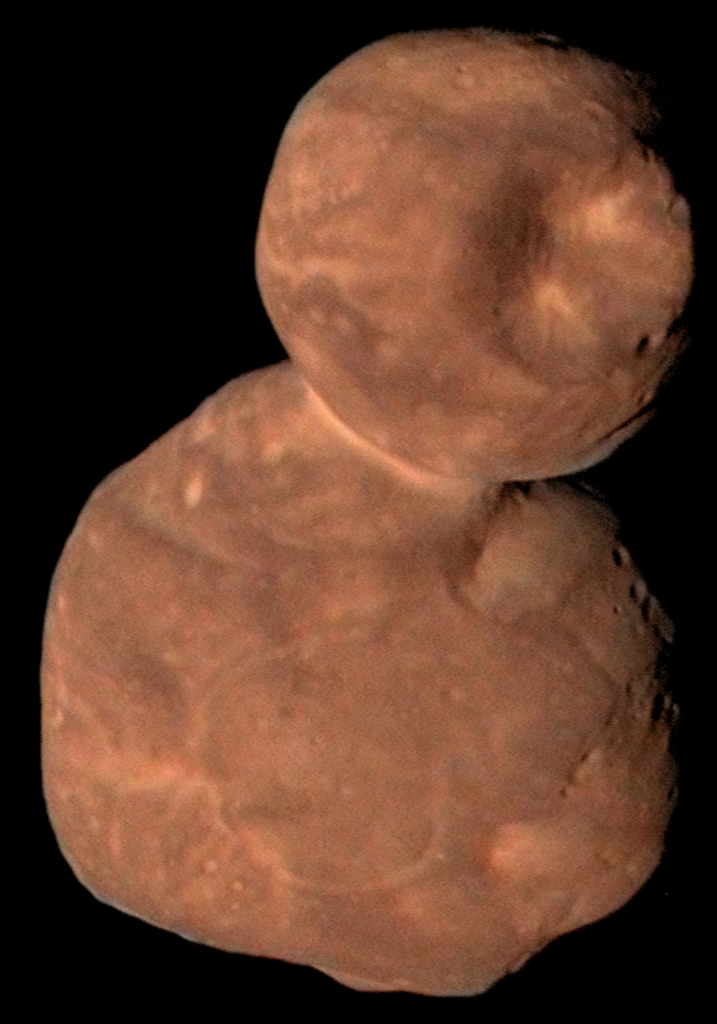
Since its launch in 2006, the New Horizons spacecraft has been speeding out of the solar system, transforming our understanding of planetary science along the way. In 2015, it provided the first close-up views of the Pluto system and revealed an astonishingly active world, replete with active glaciers, dynamic atmosphere, and possible signs of cryovolcanism. Four years (and about five astronomical units) later, New Horizons went on to perform the first flyby of a small Kuiper Belt Object: (486958) Arrokoth (formerly 2014 MU69). This 30-km wide, icy world is a relic of planet formation, with its own odd geology and formation story. In this talk, I’ll recap New Horizons amazing journey—and my parallel journey here on Earth, going from a graduate student, competing against the New Horizons team, to a researcher embedded within the team and shaping its future. I’ll close with some perspective about future exploration of the outer solar system.
James Tuttle Keane
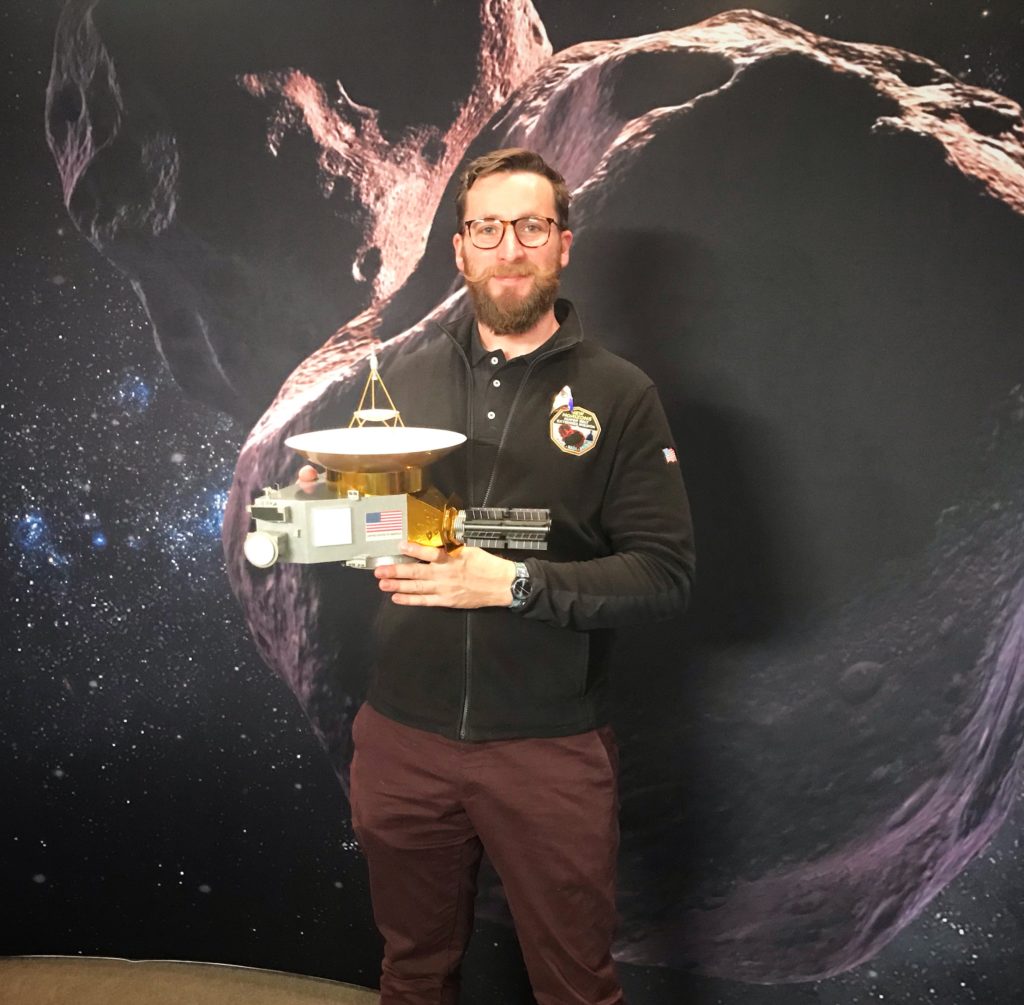
Dr. James Tuttle Keane hails from Cedar Rapids, Iowa. He received a bachelor’s degrees in Astronomy and Geology from the University of Maryland, College Park, and a doctorate in planetary science from the University of Arizona. After a postdoctoral position at the California Institute of Technology, he started at JPL in 2020. Dr. Keane is a planetary scientist, studying the interactions between orbital dynamics, rotational dynamics, and geologic processes on rocky and icy worlds across the solar system. He uses a combination of theoretical methods, coupled with the analysis of spacecraft-derived datasets to investigate the dynamics, structure, origin, and evolution of solar system bodies. He has extensive experience with NASA missions, including GRAIL, New Horizons, and the proposed Io Volcano Observer.
Views: 2
Event: Washington Elementary
Date: Wednesday, 9/30/2020
Time: Viewing at 7:00 PM, Sunset at 7:45 PM
Place: Washington Elementary
Address: 4225 Sanborn Ave; Lynwood, 90262
Location: 33°55’29″N, 118°11’23″W
Views: 1
