This is a free and open to the public online event, to attend please register with zoom by clicking here at or after 6:40pm.
The 2nd session of the Beginners Astronomy Class covers the different types of equipment used to observe the night sky, including telescopes, mounts, eyepieces, filters, and advantages and disadvantages of different options.
This session is a must if thinking about buying a telescope.
For details, please visit here and download the sample information PDF package.
Views: 36
This is a free and open to the public online Zoom event, to attend please click here at or after 6:40pm
The 1st session of the Beginners Astronomy Class gives a general overview of all of the different objects you can see in the night and day time skies, with some history and information about what they are and their significance. An overview of the current scientific understanding of the Universe’s beginning, present and future is also covered.
For details, please visit here and download the sample information PDF package.
Views: 76
The Kuhn Observatory/Telescope was open for both Star Parties in June, on the 21st and the 28th.
This photo shows a great shot of the Kuhn Telescope, with a few long-term and new members enjoying their visit to the observatory.
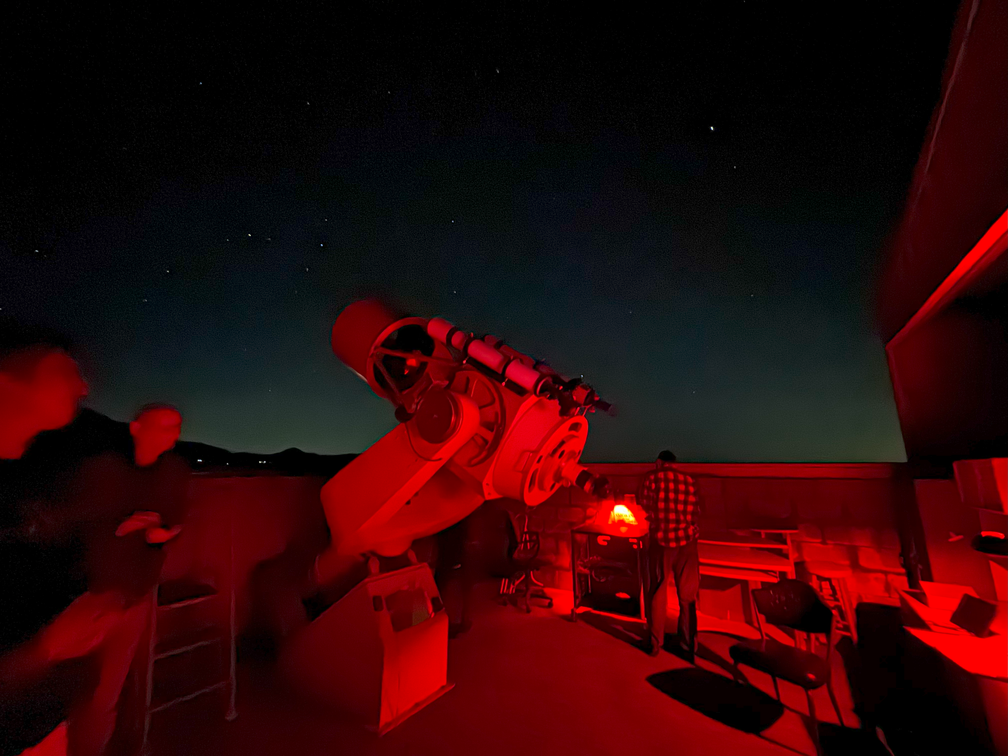
We expect to have the observatory open for the July Star party (on the 26th), and we look forward to seeing you there.
Views: 129
This meeting’s speaker will present inperson from the Chapman campus.
Pathway to a
Post-Global Warming Future
— A Brief Overview of Climate Science,
Consequences, and Solutions
(and their astronomical connections!)
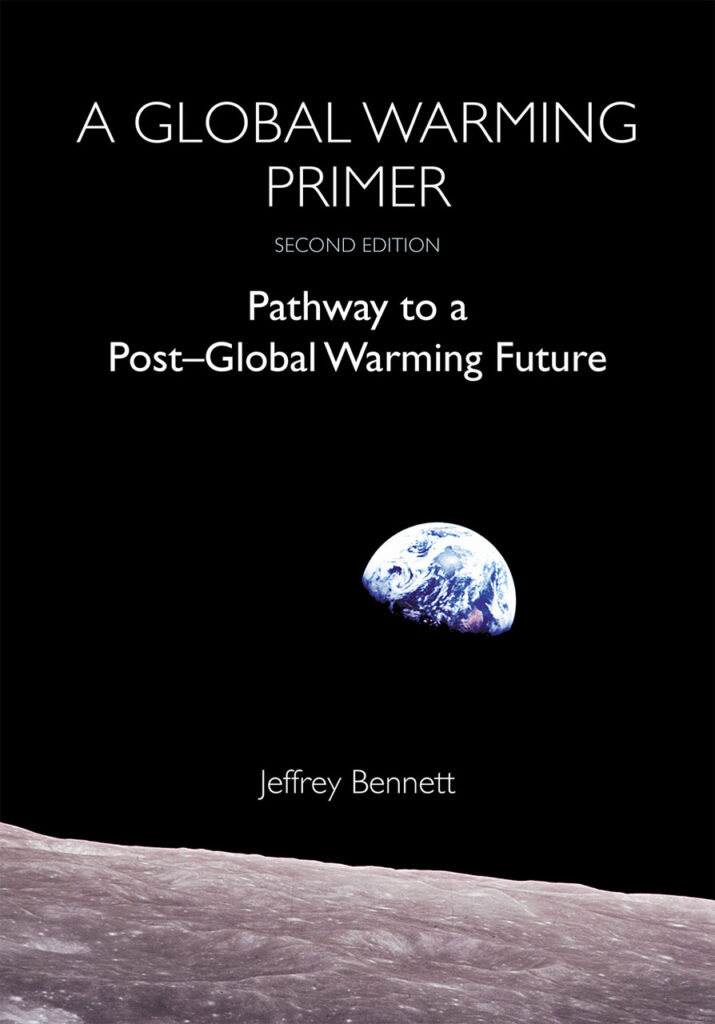
Global warming may not seem obviously connected to astronomy — but it is. In fact, the basic science of global warming is best understood through comparative study of planets. In this presentation, astrophysicist/educator Jeffrey Bennett will give you a brief overview of the surprisingly simple basic science behind global warming (including its astronomical connections) and of the consequences we can expect from this warming. Most important, he’ll focus on solutions and how we can in principle take the steps necessary to create a “post-global warming” future, meaning a future in which today’s children will someday be able to talk about global warming as a once-serious problem that we found a way to solve. Note: This talk is based on Dr. Bennett’s book A Global Warming Primer — Pathway to a Post-Global Warming Future.
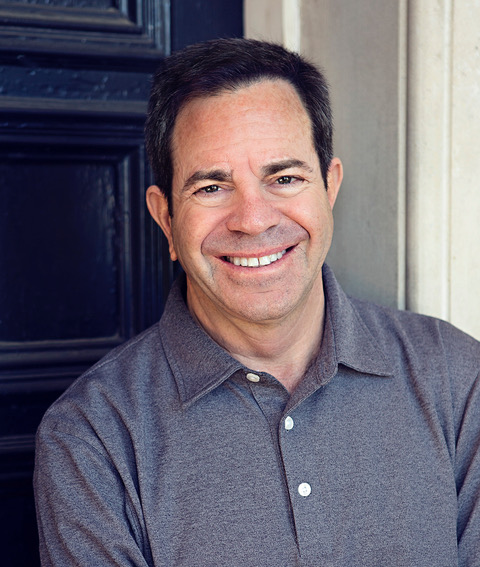
Astrophysicist/educator Jeffrey Bennett has devoted his career to science education and outreach. He is probably best known to the astronomy community as the lead author of the widely used textbooks The Cosmic Perspective and Life in the Universe. He is also the author of textbooks in math and statistics; of several critically acclaimed books for educators and the public; and of 7 award-winning science books for children. He served two years as a visiting senior scientist at NASA headquarters, proposed and co-led development of the Voyage Scale Model Solar System on the National Mall (Washington, D.C.), created the free Totality app for learning about solar eclipses, and created a free online textbook for middle school Earth and Space Science. Among other honors, his children’s books were the first ever selected for Story Time From Space, in which books are launched to the International Space Station and read aloud by astronauts, and he has won both the American Institute of Physics Science Communication Award (2014) and the Klopsteg Memorial Award (2023) for education from the American Association of Physics Teachers. In addition to his ongoing speaking series on global warming, his current projects include working to spread Voyage model solar systems across the country, a planetarium show based on his book Max Goes to Mars, and a new book on The Scale of the Universe to be published in January.
Views: 296
This meeting’s speaker will present online from Topeka, KS.
Exploding Stars and Life on Earth
Scientists have long speculated that the history of life on Earth may have been influenced by cosmic explosions such as supernovae. In recent decades the combination of astrophysical data and computational models have allowed detailed study of the potential effects of nearby stellar explosions on Earth’s atmosphere and biosphere. Impacts range from destruction of stratospheric ozone, exposing life to extreme levels of solar UV, to direct damage to organisms by high-energy neutrons and muons. This talk will summarize what is known today and discuss connections to mass extinctions and the evolution of life over the last few hundred million years.
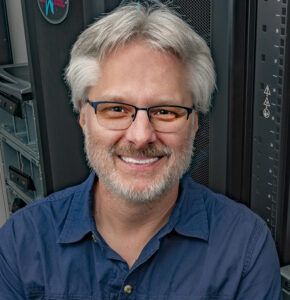
Dr. Brian Thomas is a Professor in the Physics & Astronomy Department at Washburn University, in Topeka, Kansas. Since 2003 he has worked on various problems related to understanding how the history of life on Earth may have been affected by high-energy astrophysical events such as gamma-ray bursts and supernovae. He and collaborators from multiple disciplines have together produced some of the most detailed and state-of-the-art studies of the effects on Earth by nearby stellar explosions.
Views: 236
This meeting’s speaker will present online from Los Angeles.
A Trip to the Center of Our Galaxy
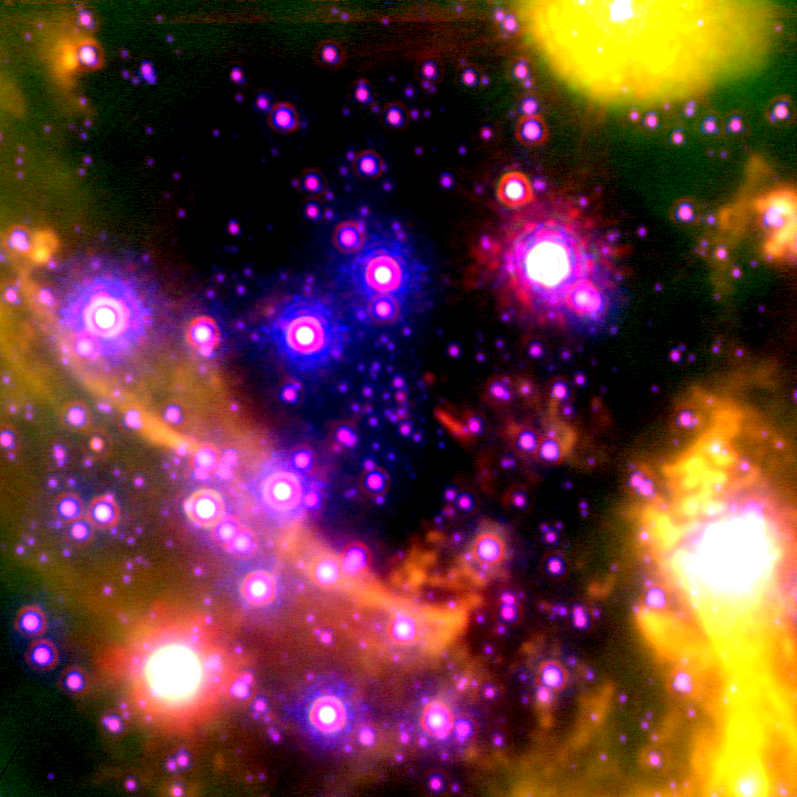
The heart of the Milky Way is home to Sagittarius A*, a supermassive black hole approximately four million times the mass of the Sun. Although it remains largely quiet today, it is surrounded by a turbulent sea of gas, dust, and exotic objects that could one day trigger dramatic outbursts. This presentation delves into this extreme environment, exploring the large-scale gas clouds and the closer-in structures that fuel the black hole. It examines how molecular hydrogen manages to survive intense ultraviolet radiation and introduces a newly identified class of enigmatic objects orbiting perilously close to Sagittarius A*. Observed over two decades with the Keck Observatory, these objects may represent the remnants of stellar collisions or merged binaries, offering valuable insights into how matter behaves under immense gravitational forces. Mapping this region helps to illuminate the intricate interplay of stars, gas, and gravity at the core of the galaxy.

Anna Ciurlo’s research focuses on stars and gas around the supermassive black hole in the center of our Galaxy. Her work leverages high-resolution imaging and spectroscopy from large ground and space-based observatories like Keck and the JWST. She earned her PhD in astrophysics from the Sorbonne Paris Cité and pursued postdoctoral research at UCLA. She was an inaugural year Keck Visiting Scholar at Keck Observatory. Anna continues at UCLA as an assistant researcher and adjunct assistant professor in the Galactic Center Group.
Views: 6
This meeting’s speaker will present inperson.
Backyard Exoplanet Observatory …
measuring exoplanets with
a small backyard telescope
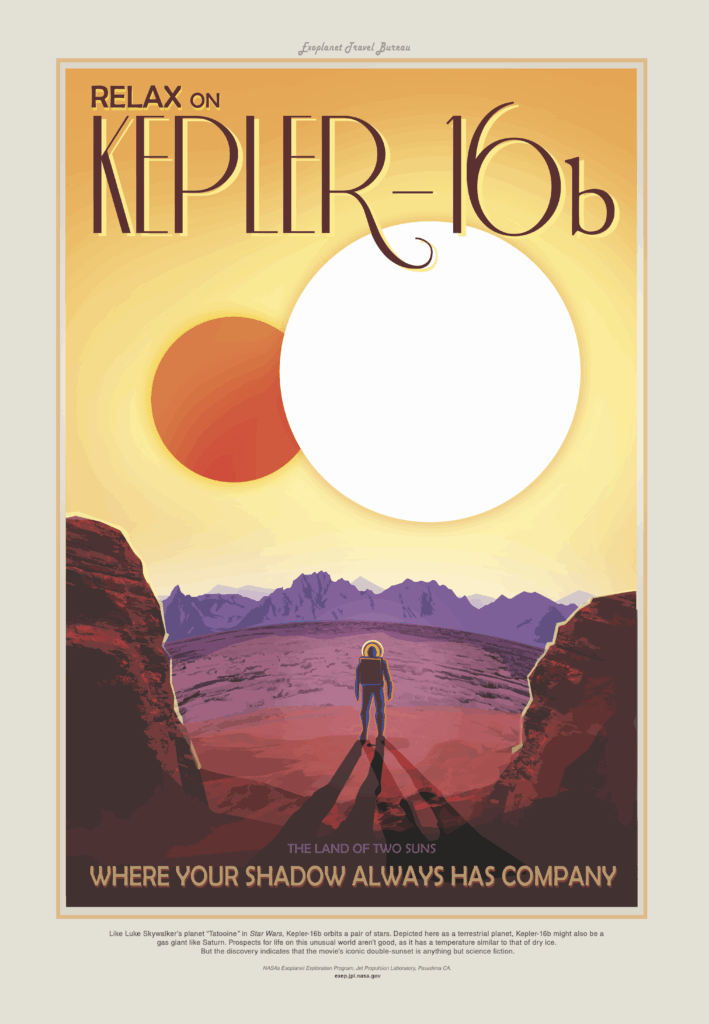
Amateur astronomers can measure exoplanet parameters from their suburban backyard using a small telescope, astronomy camera, and a laptop

Mr Hallman is a retired physicist with over 30 years experience in the aerospace industry doing design, development, and testing of imaging systems and sensors operating in the Visible, Infrared, and Radar spectral regions. He has been a member of the OCA for 1 year, and is currently building a backyard Radio Telescope.
Views: 39
